The Restaurant Turnover Rate Explained

Sharing is caring!

Now Hiring It’s busy season in your restaurant, but you’ve lost several servers this month, and you can’t figure out why. You’re not the only one; according to Restaurant Business Online, the turnover rates for hourly-level restaurant employees climbed to the highest level in decades as of April 2018. There are various internal and external factors that contribute to the cycle of employee loss. The first step in solving a problem is recognizing that there is one. Understanding the reasons for turnover will help you maintain a full staff and smoothly operate your business.

THE STUDENT REVOLVING DOOR

The restaurant industry is the leading employer of teenagers and students. According to National Restaurant Association, one-third of all working teenagers in the U.S. are employed in a restaurant and 27% of all food and beverage employees are enrolled in school. Students often work in the hospitality industry as a way to earn fast cash before they graduate. In fact, students rarely work full-time while they are pursuing their college degree. This could cause conflict between the employer and employee due to changes in school and work schedules. As a restaurant manager, it is necessary to understand the likelihood of losing student employees.

COMPETING FOR RESOURCES

Turnover rates increase when the economy is doing well. This is due to a higher number of opportunities at other restaurants and businesses. You’re not just competing for customers anymore, but for valuable workers. Forbes labels a strong economy as a catalyst for high employee turnover. “More jobs mean more choice for workers looking for the right company fit. When an organization no longer seems like a good match, an employee is more likely to move on.”

EMPLOYEE TREATMENT

Long hours, low pay, little recognition, and poor work culture can contribute to high turnover rates. If you’re not paying any attention to employee’s states-of-mind, they’re likely to leave. Recognizing that each employee has a life outside of the restaurant is crucial in keeping them around. Make it a habit to inquire about your employees’ family, school, or hobbies. Know what your staff is doing outside of the restaurant and show that you care about their work-life balance. Understanding their outside life is important, but creating an engaging internal culture is just as vital. The New York Times reports that “employees are engaged when they feel productive, think they are contributing to their company’s mission, have trust and confidence in their managers and are given the opportunity to grow and advance — not necessarily by climbing the corporate ladder, but by learning new skills.” Creating a valuable company culture isn’t easy, so we’ll be posting another blog soon that explains how to do so.

THE REASON COULD BE THE SEASON

Some employees leave with the seasons. The National Restaurant Association reports that there are more than 500,000 restaurant jobs added in the summer… up North that is. In Florida, summer is the slow season. Fewer customers mean fewer tips: a server’s worst nightmare. Regardless of where you live, during off-seasons, front-of-the-house staff suffer and may seek employment in another industry.

Although you don’t have control over economic and seasonal issues, you can prevent losing employees by becoming familiar with the risks and providing a supportive, inviting company culture. Read more about some of the ways you can curb turnover rates here.

To keep up to date on trends that can affect your restaurant, sign up for our newsletter. If you need help marketing your restaurant or repairing your brand, contact us at Absolute Marketing Solutions.
You Might Also Like:

8 Necessary Elements for Successful Logo Design

We are surrounded, from the second we wake until the time we lay back down, by logos. Not only do we look at them, but we interact with them on our phones, computers, and tablets. You may not always notice, but they are always present… and the ones you do notice stand out for a reason. Logos can project a powerful message, often without a single word. But how do certain logos convey meaning, grab attention, and stand the test of time while others are overlooked and soon forgotten? Our graphic designer, Chelsea Pence, gets to the bottom of this by delving into the processes and considerations behind notable logo design.

1. Why Are Logos Important?

“People often choose products based on their perceived value rather than their actual value” (Logo Love). A logo is often a consumer’s first interaction with a company, so it needs to be not only memorable, but compelling enough to convey the company’s branding and philosophy all in one. Your logo is a literal reflection of your company. When done right, logos will transmit values, ideas, and emotions to your intended audience.

2. How Do You Get Started?

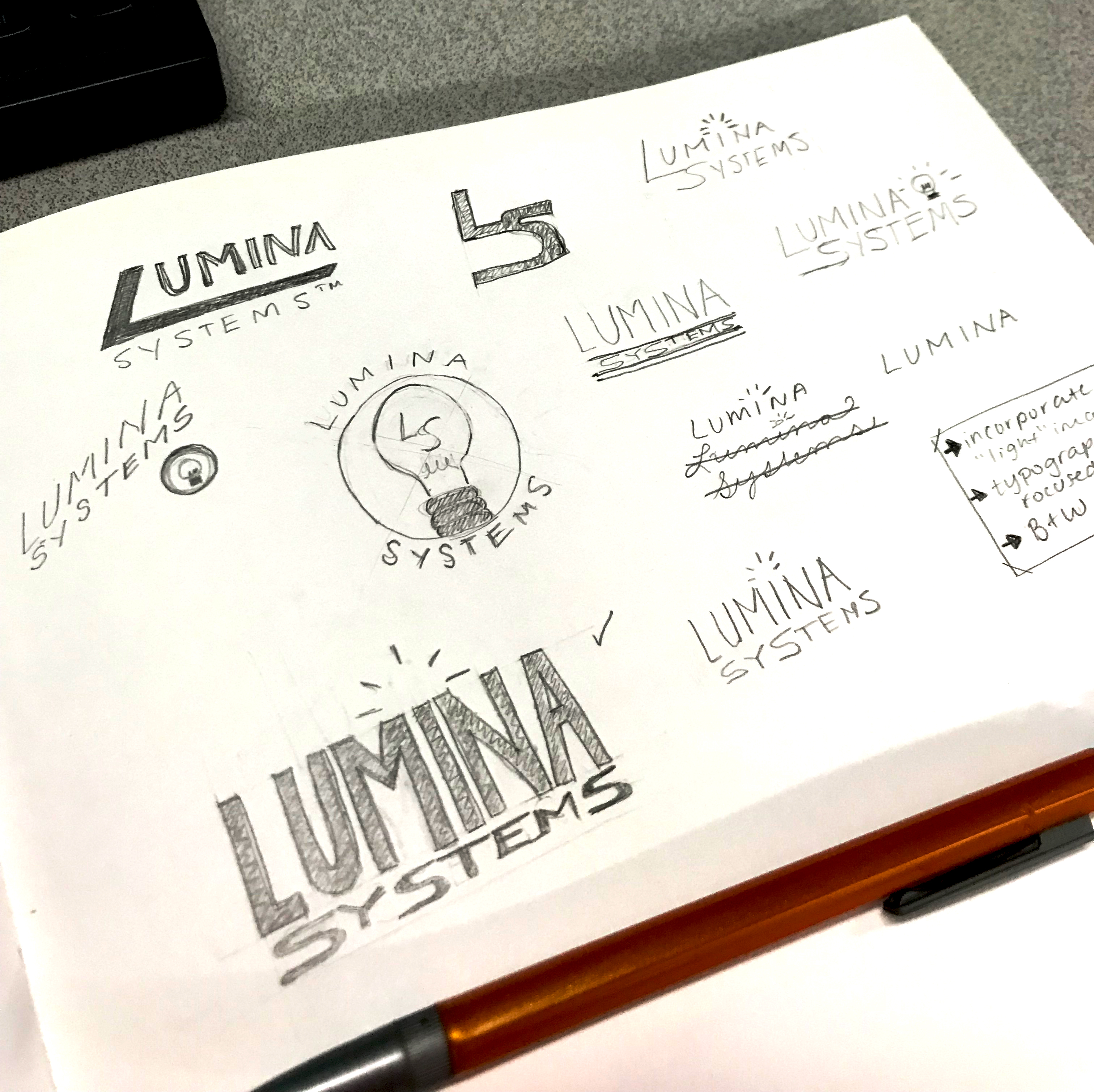
Begin by talking to your client and hearing their needs. Learn about their branding goals and the image they want to establish. You want to know everything about the company that you can. What are their strengths and goals? How do they define their brand and what is their company culture like? Who is their target audience? Once you have a thorough understanding, sit down with the client to agree on a budget and deadline. From there, sketch and sketch some more. Try mind-mapping (visually organizing) your ideas. Put every possible idea onto paper and then hone it down to a few possibilities that you will further develop.

Logo Brainstorming

3. Are There Any ‘Must-Have’ Design Requirements?

All logos are different; there aren’t many widespread requirements, but the best logos are simple and recognizable. We all know the typeface for Coca-Cola, and the Nike “swoosh”, and what those images represent. Every logo is unique but every client requires different branding, so it’s important to know the design rules like a master. Once you get down to the process, you will make better looking sketches and have a better final result.

4. How Do You Choose Typeface + Color?

The optimal strategy when handling elements of style is to consider the form and font first, by working in black and white. It is crucial for your logo to be readable without color, however, colors are very important as they are tied to cultural and emotional values. There is much thought that goes into deciding what colors to use since this aspect most noticeably gives meaning to your design.

5. What Does the Rest of the Process Entail?

Oftentimes you and the client won’t see eye-to-eye about the design or process, so it’s important to immediately establish what the expectation will be. Make sure you know your point of contact, and if a committee will be involved in the final decision, so you’ll know how to communicate properly. Help your clients; make sure you’re able to explain the design process in-depth to all decision-makers and keep them involved as well. A good rule of thumb: always under-promise, and over-deliver. Being able to hit your deadlines and communicate clearly is key to a healthy client relationship. This process depends on communication and trust. You’re still questioning and checking with your client regularly, but it’s important to establish a good relationship from the get-go so that your client will trust you and give you enough creative freedom with the design process.

6. How Long Does the Entire Process Take?

It can take anywhere from a few hours to a few weeks to design a solid logo. Creating something from your client’s concepts is hard work and can often be time-consuming because of the back-and-forth communication. The best designers stick to rigid schedules and let their client know up-front what the process entails before starting the project.

7. What Happens if You Get Stuck?

No matter what, don’t look at too many other logos if you get stuck. Avoid the comparing mind, or you’ll wind up confused and discouraged. It is always good to have inspiration, but the best ideas come from intuition. It generally goes back to understanding the desired brand identity and your client’s target audience, so don’t be afraid to ask additional, clarifying questions. When in doubt, put a pencil to paper.

8. Is it a Good Idea to Buy a Logo Online?

The problem with quick and easy $5 logo sites is that you won’t receive the detailed thought that fuels the creation of a genuinely representative and artistic logo. A logo purchased online will usually be clip art from a stock image company, or at best some amateur work that today’s consumers will not give a second glance. Always choose to work with a trained graphic designer who can deliver quality work rather than using a random website.

A unique logo is a cornerstone of any prominent brand. Logos make up an international language that when designed properly, anyone can understand. Whether you are designing a logo from scratch or re-designing an outdated logo, the process is elaborate. A web-generated symbol will never make headlines or turn heads- it takes time, training, and a comprehensive understanding of the client to produce newsworthy results. If you need help designing or re-designing a logo, contact us at Absolute Marketing Solutions.

You Might Also Like: