“Siri, what restaurants are near me?” How to break into local SEO for restaurants

Like many restaurateurs, you probably see a lot of new faces in your restaurant every week. But where are all these new diners coming from? Most restaurateurs we have spoken to believe the adage that “the only marketing a restaurant needs to do comes from the kitchen,” and that word-of-mouth is responsible for bringing in most new customers. As catchy as that sounds, it isn’t necessarily so.

Right now, you may be thinking “Who cares how they found us? As long as they come in and eat.” The answer is simple: if you don’t know where your customers are coming from, then you have no hope of controlling how effectively you attract new customers. We have yet to meet a restaurant that didn’t want to attract new customers.

For the past two decades, study after study has demonstrated that the internet has surpassed all other means by which people discover restaurants. If you have not considered how and where your restaurant appears in search results (if it appears at all), you may be losing opportunities to create new customers and increase your local visibility. Local SEO is the marketing tactic that puts your restaurant in front of consumers when they are deciding where to dine.

Are you interested now? Let’s dive in deeper and learn a little more about what trends are driving the need for Local SEO and how to use it to drive more customers to your restaurant.

Why Local SEO is Important

Location, Location, Location

It has long been a restaurant maxim that the three most important decisions when opening a restaurant are location, location, location. Unless you are a destination restaurant, customers will not travel far to visit you. According to Brightlocal, the average time a consumer is willing to spend traveling to get to a restaurant is 17 minutes, which in most cities could represent just a few miles. This means that the majority of your customers are likely in a limited geographical area, or in other words, “local.”

According to research conducted by SinglePlatform, 75 percent of consumers say they frequently choose a restaurant based on local search results.

“Siri, I Want Tacos”

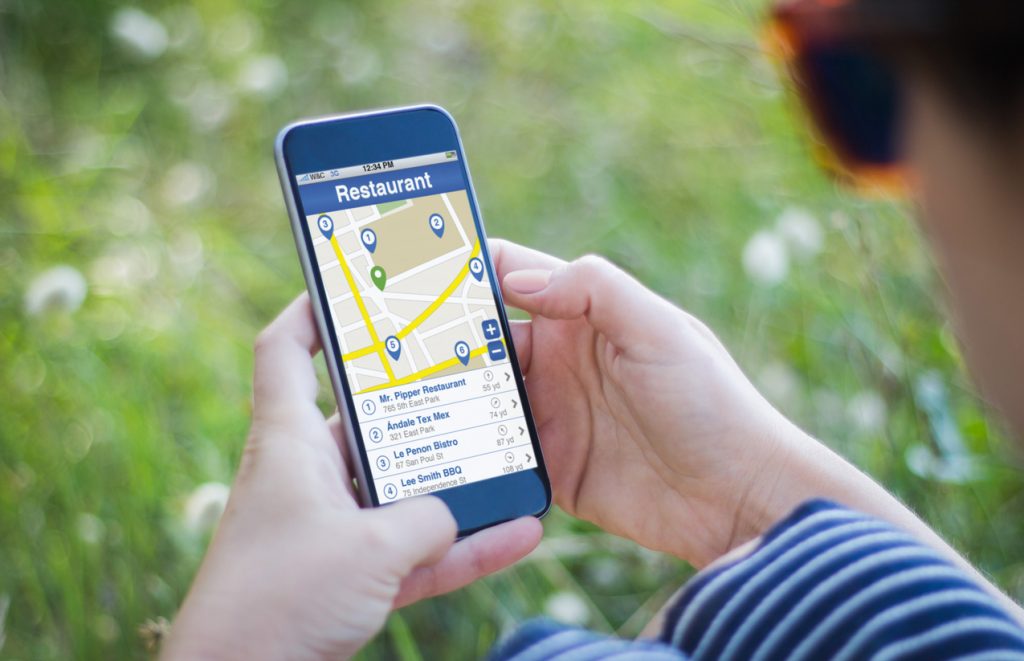
Most local searches are conducted on mobile devices, a trend that has only increased since the release of digital assistants such as Siri, Google, and Bixby. This “voice search” technology allows users to request information and the device searches the internet for the best response. When a user makes a request such as “I want tacos,” the device assumes that the intent is to find nearby taco restaurants. When your customers ask their phones for tacos, does it send them to you or someone else?

What is Local SEO?

Local SEO encompasses several activities aimed at helping businesses promote their products and services to local customers. Whether you are a single restaurant or a multi-location chain, local SEO can help customers find your location at the moment they are most likely making a dining decision.

There are several elements to an effective Local SEO effort, including directories and citations, reviews, website optimization, and local link building.

Directories and Citations

Citations are defined as any online mention of your business name, address, and phone number. You may find citations listed in local business directories, social media platforms, or websites and apps. The purpose of citations is to help users find local businesses in their area. Citations also influence the results you may see on local search engine rankings like Google Maps or Bing Places. For this reason, you should make it a habit to manage your business’ citations to ensure that they’re accurate.

Since the number of citations for your business has an impact on Local SEO, your restaurant locations should be listed on as many local and industry directories as possible. This is easier said than done, as there are typically dozens of directories with new ones emerging almost daily. There are at least 13 core local citation websites in the U.S. that you must be listed on.

Here is a list of just some of the directories for restaurants to be listed in:

  • Acxiom
  • Apple Maps
  • Bing
  • Citygrid
  • Facebook
  • Factual
  • Foursquare
  • Infogroup/ExpressUpdate
  • Localeze
  • Superpages
  • Yahoo!*
  • YP/Superpages
  • Yelp
  • Google My Business
  • TripAdvisor
  • Allmenus
  • Urbanspoon/ Zomato
  • Manta
  • Indeed
  • BBB

There are three main ways to perform citation management, manually, semi-automated, and automated. In manual citation management, you manually build and manage your citations. This is extremely time consuming and error prone. For this reason, we do not recommend this approach. Semi-automated citation management occurs when a firm uses an automated service to manage some citations while building and maintaining others manually. This service is provided by a number of vendors and is one we often employ for our clients. Automated citation management is wholly automated by service providers such as Moz Local or Yext. This can be the most cost-effective method of citation management.

If you decide to choose a semi-automated or fully automated local citation service, make sure to ask the service provider what happens should you decide to cancel your service in the future. Some vendors will claim ownership of your citations, which means you will have to go through the process again if you terminate your contract with them.

Optimize your citations

In addition to the number of citations your location may have, it is important and vital that your citations are accurate (and consistent). You should pay special attention to the Name, Address, and Phone (called the NAP), and make sure they are spelled EXACTLY the same way as they are listing on your Google My Business profile. If you fail to remain consistent, it may result in duplicate listings, which could negatively affect your local rankings. This is because Google recognizes it as two different addresses and will believe that you are two different businesses instead of consolidating it into one. You should consider your customer as well, as you want them to easily find you online and know where you’re located. Don’t confuse or frustrate them with multiple listings of your business.

Regardless if you choose the manual, semi-automated or fully automated citation management system, you will always want to maintain consistency with every citation. Optimize each listing with additional information such as business hours, contact information, photographs, and other useful pieces of information to the user. Remember to update the listings frequently, and have a system or process in place should you need to change them.

Reviews, Reviews, Reviews

Did you know that Google will serve restaurant results with the highest reviews and closest proximity in a local search? According to a collection of online review stats by Vendasta, star rating is the number one factor used by consumers to judge a business.

While that may be specifically tied to your rating on your Google My Business page, the more positive reviews across a various number of review websites, the better. Consumers are heavily influenced by online reviews and for a good reason. Quality, frequency, and variation are what customers are looking for. Here are a few stats from Vendasta’s series that are of particular interest to restaurant owners.

  • 92% of consumers read online reviews
  • 88% trust reviews as much as personal recommendations
  • 95% of consumers suspect censorship or faked reviews when they don’t see bad scores

As you can imagine, it’s important to have a system and policy in place for handling customer reviews. For the positive ones, always make sure to thank the reviewer for their input. For negative reviews, always acknowledge them so that your audience can see that you care and are responsive. Next, try to take the conversation offline by directing them to a survey form, email, or phone call, depending on the nature of the complaint. For more information on how to handle negative online reviews, please visit our blog here. (link to how to handle customer complaints)

Is your website optimized?

There are several on-page SEO factors that play a role in helping or hurting your restaurant from ranking locally. Having a footer with your NAP displayed is highly recommended to make sure your contact info is consistent with your online citations. If your business has multiple locations, building a relevant landing page for each of them would be a best practice as well.

As for the specifics on your website, there are some parameters you can edit to get the most local SEO oomph. Let’s imagine that you operate Bernini’s, a fictitious Italian-style pizzeria in Hyde Park in Tampa. We recommend optimizing the following:

Page Title– This is the title of the page that the user will view on Google’s search results. In this case, we’d recommend you change it to something like, “Bernini’s Pizzeria | Authentic Italian Pizza Serving Hyde Park since 1981.” Try to summarize your business with as much information as succinctly as you can, so that the user can understand where you are and what you offer by taking a few seconds to read it.

H1 – This is the main headline of the page, and should describe what the user will find.  An appropriate H1 could be, ‘Bernini serves Italian-Style Pizza in the Heart of Hyde Park.’

URL/ Slug – WordPress allows you to edit the slug of a webpage so that you can include keywords as well. You should include the name of your restaurant, in addition to your location. For example, this is the text in the address bar containing the website name, ‘www.berninisitalianpizza/tampa-pizza.’

Page Content – Here you have a blank page to tell the reader (and Google) what your restaurant is all about. Be sure to include your target location, in addition to relevant keywords. You should aim for 300-500 words here, but make sure the content is valuable to the reader.

Meta Description – Under your page title in the search results, you have a snippet of text available to describe what users will find on that given page. In December 2017, Google officially expanded its snippet length from 160 to 230 characters. In your meta description, be sure to provide a brief description of your business, location, at least one important keyword, and a call to action!

Local link building

If you ask any SEO, link building is one of the most important components of a successful SEO strategy. Link building involves acquiring links back (backlinks) to your website from high quality and relevant websites. The more links you receive from trustworthy and authoritative websites, the more trustworthy and authoritative your website will appear. Google’s (and other) search algorithms weigh backlinks very heavily when determining rankings. Since newspapers, magazines, and niche publications are typically both trustworthy and authoritative, receiving backlinks from this sort of publication can help your website rank higher for local searches. You should also reach out to bloggers and writers in your area to be featured on their local blogs and publications. Link building can be a very time consuming endeavor, but it is crucial for increasing your ranking in local search results.

Getting in a local pack can be very challenging, depending on your local competition and your digital marketing efforts to date. However, it’s not impossible. Developing a strategy to improve your restaurant’s local presence is a multi-step journey that takes time and cumulative effort. To get started on a local SEO strategy to boost your restaurant’s local visibility, contact the Tampa local SEO experts at Absolute Marketing Solutions by calling 813-908-6862. We’ll craft a unique digital marketing plan that addresses your business’ objectives and goals.

You Might Also Like:

Miné Salkin

Miné Salkin is a multimedia producer with a specialty in marketing, tech writing and digital storytelling.

More Posts

5 New Years’ Resolutions Your Restaurant Should Have

Every year, millions of Americans decide to make a list of ways to improve themselves in the new year. Whether it’s to drop a few pounds, land a dream career, or take a vacation to a bucket list destination, many people have dreams and aspirations.

As a restaurant owner, you’ve probably made a few resolutions in the past. A resolution to make more profit. A resolution to improve customer retention. A resolution to decrease employee turnover. Just like the will to lose weight, the motivation from new year’s resolution starts out strong, but can fizzle out after a few months when we go back to our normal habits and behaviors.

Sounds familiar? You’re not alone. While it’s human nature to always want to improve oneself, some goals need to be broken down into steps to be properly managed and executed.

New Year’s resolutions have a reputation for being hard to keep, but consider how successful your restaurant could be if you set achievable goals and reached them in 2018. At Absolute Marketing Solutions, we’ve worked with clients in the restaurant and hospitality industry achieve their goals that lead to revenue-boosting outcomes. Here are some New Year’s resolutions you should make for your restaurant, and how to nail them.

Improve your website

Does your restaurant order delivery or take out? If so, can guests order on your website? Over 57 percent of guests order from a restaurant online daily, weekly, or monthly. If your website isn’t mobile-friendly or responsive, then you could be sending customers to other restaurants.

Quite often, your website is the first impression that a potential customer has of your restaurant. Mouthwatering photos, detailed contact information, and a good user experience are all ingredients required to make a positive first impression. This is your best chance to encourage them to call, make a reservation, or order online.

>>Related post! To learn more about responsive web design for restaurants, visit our blog about 5 features your restaurant website must have in 2018.

Tidy up your local listings

Local listings are important for restaurant owners because listing mistakes can increase customer frustration and fewer visitors to your restaurant as they can negatively impact your local search rankings. Local listings and directory citations management can be a time-consuming process, so you may wish to enlist the help of an agency to manage it for you. For more information about restaurant listing and citation management, visit our local SEO services page and get a FREE powerlistings test!

Be a better listener

Part of creating a New Year’s resolution is to assess oneself and come to terms with your strengths and weaknesses. No matter how hard you or your staff may work at providing a world-class experience at your restaurant, not every customer will walk away satisfied. Reputation management is an ongoing process of reviewing and replying to your customers’ and critics’ likes and dislikes in a way that shows that your restaurant is a customer-centric brand. You do this by demonstrating a will to resolve problems and a desire to make the customer happy. Analyze the nature of your customers’ comments and sentiments, as it may indicate root issues that need to be addressed. If you need help putting together a reputation management strategy for your restaurant or business, we can help. Learn more about our Tampa reputation management services by visiting our page here.

Help your customers nail their resolutions

The chances are that your customers made resolutions too. Consider making changes to your menu such as offering lunch-sized portions for dinner, offering low-fat or low-carb substitutes for other menu items, and different ways to help your customers curb their caloric intake. Your customers will likely appreciate the flexibility in their ordering options, and it will motivate them to make healthier choices. If you offer smaller portions on your menu, it could also reduce the amount of food waste your establishment produces. As far as we can see, this is a win-win-win situation for everyone!

Partner with another business in your community

As always, you should aim to create meaningful partnerships with related brands in your community to increase brand awareness, and strengthen your position in your city. Let’s consider for a moment that becoming a health-focused restaurant is your business objective, and you want to partner with a local gym to offer discount and benefits for its members. You could create a campaign that rewards your customers with a discount to join that gym, and offer the gym’s patrons a discount at your establishment too. This may allow you to brand yourself as a health-focused eatery and attract a new clientele you otherwise would not have been exposed to.

Whether you need a website facelift, a local SEO audit of your directory listings, or a crash course on reputation management, your restaurant can benefit by paying closer attention to its digital presence. Make 2018 your year and take control of your restaurant’s presence online. Contact the team at Absolute Marketing Solutions today to get started!

You Might Also Like:

Miné Salkin

Miné Salkin is a multimedia producer with a specialty in marketing, tech writing and digital storytelling.

More Posts

Holiday Marketing Ideas for Restaurants and Bakeries

My mind was blown when I learned that it’s a widespread tradition for Jews go to Chinese restaurants on Christmas Day in America. This tradition goes back many decades to a time when Chinese restaurants were among the few restaurants that were open on Christmas Day. Although more restaurants now remain open for Christmas Day, only 8 percent of Americans visit restaurants or bars on Christmas Day itself.


Despite the low number of diners on Christmas Day, the holiday season remains a prime time for restaurants to attract diners looking to celebrate or avoid preparing meals at home. The end of the year is a time for both celebration and reflection. It is a time when families come together, and businesses celebrate the successes of the year. It is also a time for stressful shopping and busy schedules which makes dining out seem a welcome break.

However, this is also a time in which we are inundated with marketing messages from almost everywhere. This makes it important that your holiday marketing messages stand out and offer something of value. This could be anything from creating an emotional connection such as nostalgia or humor or a diversion from holiday stress. In the spirit of the holiday season, we have curated the best holiday marketing ideas for your restaurant.

Plan Early

You should always start your planning of holiday campaigns early. Reservations will need to be carefully booked, and your staff will need to be prepared for the extra efforts required for holiday customers such as larger groups. You can also offer discounts for early bookings to fill up your catering and party reservations.

Show Your Spirit

The holiday season is typically one of high spirits, and you should show that your restaurant shares in this. Some ideas include:

  • Making things personal by showing off your staff in a festive way.
  • Add some holiday cheer to your social media cover pages.
  • Decorate your establishment.
  • Show off unique holiday menu items.

Partner with a local charity and make a donation

Holidays are a time of the year where people are more inclined to be reflective of those less fortunate. Restaurants can help by hosting a fundraiser, providing food for a needy family, or encouraging others to donate. Some other ideas include giving proceeds from a particular menu item or from a select night to a charity. We have also seen restaurants offer a meal to the needy for every meal served.

Participating in charitable activities benefit your community and helps grow brand awareness by introducing your establishment to new customers. We believe that partnering with charities in your community is in itself a rewarding experience. Do good, feel good!

Promote Your Holiday Specials On Social Media

In 2016, nearly 70 percent of business referrals were derived from social media or email, according to a study by Nielsen. Create eye-popping graphics to complement your holiday offers, and encourage your restaurant’s followers to share your promotions with their networks. Word-of-mouth remains a powerful marketing tactic, and social media is the ideal platform to leverage referrals during the holiday season.

Don’t Forget Email

Amplify the reach of your promotions by offering holiday specials through an email marketing campaign. Give them a reason to visit you by providing them a tempting deal such as a two-for-one meal special, a discount on group or corporate events, or a unique holiday-themed menu item that’s only available for a limited time.

Create a promotional holiday video

Videos receive more engagement and attention than static posts on Facebook, and can be a powerful marketing tool to share your promotions. Show your chef preparing a signature holiday dish, or show off your holiday ambiance to entice customers to book their corporate or holiday parties at your venue.

Hold an Instagram contest

Did you know that accounts that hold Instagram contests grow their followers 70 % faster than those who don’t? Contests that promote your holiday promotions can have two immediate benefits; they can increase the number of customers making reservations and dining at your establishment, and they can also increase the number of followers and levels of engagement you have on your social media channel. Consider running a contest where users “like” your holiday post for a simple prize, such as a $25 gift card. You may find that your posts will get higher engagement than others.

Reach out to last year’s customers

You may decide to segment your email list and reach out directly to customers who held parties or events at your establishment last year. Send them a personal email with a special offer for loyal customers such as a discount for advance bookings, or another promotion. The holidays are a time of tradition, and if you can become a tradition for a group, company, or family, the holidays can benefit your restaurant year after year.

If you have some ideas in place for a holiday promotion, but aren’t sure how to execute it in the most cost-effective way, or are unsure about how digital marketing works, contact the team at Absolute Marketing Solutions to learn more about your restaurant holiday marketing opportunities.

You Might Also Like:

Miné Salkin

Miné Salkin is a multimedia producer with a specialty in marketing, tech writing and digital storytelling.

More Posts

How to measure your restaurant’s brand awareness

restaurant-brand-awarenessThe concept of a brand can sometimes be difficult to define. For many of our clients, they express a vision of what they believe their brand is, and what kind of experience they offer their customers. For some restaurants, they hit the mark, while others may find that there is a gap between what they perceive their brand to be and how their customers view it. At Absolute Marketing Solutions, we have helped businesses and organizations re-align their overall marketing strategy to help bridge the gap between consumer and brand expectation. This often begins with a full analysis of a brand and defining the metrics by which success is measured.

While measuring brand awareness is a complex topic to marketers and business owners, we feel it essential to discuss how a restaurant can measure itself in this way. Some schools of thought believe that measuring brand awareness is an exercise in vanity metrics, but we think otherwise. While it may be one of the most difficult things to measure, understanding brand awareness is a powerful piece of information that can help business owners make business decisions.

There are several tactics you can employ to monitor and measure your brand’s awareness, and we are going to explore a few of these in this blog, so you can start tracking your brand awareness today.

Direct search

Google Analytics is a robust suite of tools that can reveal insights into your audience, performance, and brand awareness, but you need to know where to look. In the acquisition report, keep track of changes in direct traffic patterns. Direct traffic indicates how many users typed your website’s URL directly into the search bar. It could also show if a user clicked on your website from an email or bookmark. Either way, you’ll be able to see, month over month, whether there are any changes in your direct traffic report. Be sure to filter out irrelevant traffic (such as your own searches, and those of your employees) to ensure clean data.

In Google’s Search Console, you can review queries to see whether there is a change in branded search terms or other keyword searches that users search to find you. For example, you can see if users are searching for your restaurant’s name, and if the frequency is increasing or decreasing over time. Users searching directly for your brand name in a Google search is a powerful indicator that users are familiar with your brand and are using your business name to specifically search for you.

Surveys

If only a small percentage of your customers take the time to fill out a survey, you can still learn some essential details about your brand such as how they heard about you, and what they can recall about their experience at your restaurant. Whether you send out a survey using Google surveys, an email blast, or a dedicated page on your website, conducting surveys is a good way to better understand how your customers perceive your brand.

Monitor brand mentions

Keeping track of the number of times your brand or restaurant name is mentioned online can provide a wealth of information not only about the number of conversations surrounding your business but also the consumers’ sentiment. Not every mention of your business will be tagged, or have the correct handle, or will be linked to any of your official channels. Set up alerts to also monitor and track conversations such as plain text mentions that occur outside of your owned, or official channels.

Measure your share of voice (SOV)

Share of voice, aka SOV, calculates how big your share of organic, paid, or social is, compared to all of your competitors. The original formula traditionally came from the advertising industry, but for the purposes of this blog, we will consider your brand’s entire visibility as a key indicator of your brand’s overall awareness. There are tools that automate this process, such as Spyfu’s Kombat tool, sifting through millions of keywords to create a snapshot comparison of your share of voice compared to your competitors.

Measuring the awareness of a brand can initially appear as a difficult exercise, however, we believe that it is needed for every business. If you would like more information about how to measure or build your restaurant’s brand awareness, contact the digital marketing experts at Absolute Marketing Solutions at 813 908 6862 today to get started!

You Might Also Like:

Miné Salkin

Miné Salkin is a multimedia producer with a specialty in marketing, tech writing and digital storytelling.

More Posts