How to Stay Productive In and Out of the Office:

It seems like ever since the pandemic, workers have been struggling to shift their focus back into the office. But just as we adjusted to sleeping in, dressing down, and meeting on Zoom, we must readapt to traditional business standards to achieve company goals. To avoid a lack of productivity in the workplace, we recommend following these few simple steps at home and work to increase mental stimulation.

Plan Ahead:
Although it may seem obvious to any business professional, it is necessary to create a well-organized planner that tracks future events, meetings, and assignments. Building this calendar will help you stay on top of tasks and approximate proper time management. We also suggest you highlight any deadlines to ensure that they are complete. As well as creating checkpoints leading up to the official deadline to keep yourself accountable for these tasks.

Avoid Distractions:
In a recent Forbes article, studies have found that those who work from home are much less productive than those in a professional environment due to the lack of company culture, many distractions, and untrustful technology systems. Therefore, those who work in an office should take advantage of the opportunity by separating work and home life. By maximizing your work time at the office, you may feel more determined to complete tasks before the day is complete, ultimately creating more time to relax at home. In addition, you should also turn off unnecessary notifications when working to avoid any distractions. Some people may even need to hide their devices to remain focused.

Make Healthy Choices:
It may be efficient to order from a local fast-food chain while on your lunch break, but the outcomes of consuming unhealthy food can be detrimental to your mind and body. It is essential to fuel your body with natural food that gives you energy, boosts your immune system, and decreases stress. Try bringing snacks that are not prepackaged, like fruits, vegetables, or nuts. These foods lead to higher antioxidant levels that reduce “brain fog.”

Move Your Body:
These days, many companies provide amenities to their employees to promote healthy living. For example, a company may pay for a gym membership or have a fitness center in its office. These recent changes have found that employees are less likely to miss work, lowering the employee turnover rate. In addition, studies have shown a direct relationship between working out and brain function in which working out can increase memory, focus, and creativity. If your office doesn’t have a gym, try taking a brisk walk around the block to stimulate endorphins.

Socialize with Others:
One of the benefits of working in an office is having a team of professionals around you. These relationships can increase awareness of your company’s different departments and projects. It is essential to understand all aspects of a company to ensure employees work cohesively. We recommend communicating with your coworkers to collaborate on ideas or ask for advice. These interactions can also decrease stress and increase one’s mood.

Although there are many more ways to increase productivity in the office, these are just a few examples that the Absolute Marketing Solutions team has found to be successful. It is important to remember that every individual is different and may have additional methods that increase their work ethic.

If you have any questions about company culture, please contact the Absolute Marketing Solutions team.

What Restaurant Owners Must Know About Marketing

Sharing is caring!

Have you ever tried baking a cake with flour alone? Exactly. Just like the best recipes cannot be made with a single ingredient, the best restaurant marketing strategy cannot be executed with a single tactic.

With abundant information and hundreds of channels to utilize, marketing can overwhelm even the most experienced business owners. So it’s not surprising that restaurateurs are often confused about the most essential elements of marketing and how to implement them. If you want to successfully market your restaurant, it is necessary to understand the full marketing picture, also known as The Marketing Mix.

Since the 1960’s, marketing professionals have used The Marketing Mix as a managerial teaching method. The Marketing Mix describes the different aspects of a business that, when controlled, ensure customer needs are met. One of the first tasks in restaurant marketing is analyzing the restaurant based on this model. This is the first step in moving from an ad-hoc approach based on hunches to a strategic approach based on data. In this blog, we’ll discuss the 7 P’s that comprise The Marketing Mix and how you can effectively leverage your restaurant.

1. PRODUCT: what you’re selling.

restaurant product

A restaurant’s product goes beyond food. Product includes atmosphere, cleanliness, quality, and all other aspects of the customer experience. Think about each want and need of the customer so you can provide them with the experience they are looking for.

Ask yourself: What features, advantages or benefits do your products and services provide? What types of vendors are being used? Does your product align with your atmosphere? Are products and services being looked at objectively?

There is much to consider about what you’re offering. A quality product/experience is the most fundamental element of The Marketing Mix and without it, all else fails.

Think I’m exaggerating? Think again.

2. PRICE: the amount people are willing to pay.
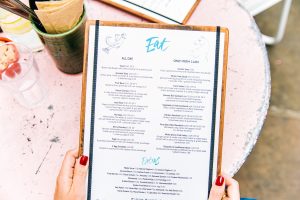
menu prices

Prices are always up for examination. It is vital to understand what type of restaurant you are: counter service, casual service, fine dining? The price of food is directly impacted by the style and stature of the restaurant.

Ask yourself: What type of restaurant do you have? What are your competitors charging? How do prices align with the current market?  How much is spent on resources and production? How much is the overall experience worth?

Price and quality coincide: prices must complement what is being offered. With a fluctuating marketplace, sometimes prices must decrease and sometimes prices must increase. Be open-minded and consider what the target consumers are willing to pay, what exactly they’re paying for, and if it’s reasonable.

Not sure where to start? Here is some advice on how to set appropriate prices.

3. PLACE: where the product or service is located.

Convenience is king, and customers will not go out of their way just to get in the door. Your product or service must be easily accessible to customers. Place also refers to outside placement and distribution.

Ask yourself: How convenient is your restaurant? Is there a central location and is it crowded? What is the parking like?  Can the products be delivered directly? Do we sell at a market or festival? Where are we advertising?

For more information on choosing the right location, click here.

4. PROMOTION: various elements like advertising and PR.

Promotion depends on the brand, product, and target audience in order to attract the desired customer base. Ranging from billboard ads to events, to social media, appropriate promotion methods are vital. Set a consistent tone for all promotional messaging that will resonate with the intended customer and evoke action.

Ask yourself: What discounts and specials are offered? Are promotions relevant, unique, and true to company values? What times of day are promotions occurring? What other social events are happening and how can these events be used advantageously? Lastly, are the promotional activities measurable?

Effective promotion depends on understanding the customer, the community, and the restaurant’s benefits. If promotional activities and messages are executed consistently with these aspects in mind, the brand will grow itself.

Here are tips to measure your restaurant’s promotional success.

5. PEOPLE: restaurant employees.

The product is linked to those who make and serve it; restaurant employees often define the customer experience.

Ask yourself: Are employees well-trained? Do they know the menu thoroughly? How do they interact with guests? Do they understand the company values and positively portray the brand?

Restaurant service is reproducible, but company culture sets service apart. A connected, communicative team is crucial in maintaining a hospitable environment and positive reputation.

Want advice on training employees? Look no further.

6. PROCESS: the efficiency of your restaurant.

Efficiency in the front and back of the house impact customer experiences and your brand. No one likes to wait around excessively; the customer must enjoy their experience from the second they enter the restaurant to the second they leave. A timely process is a part of what the guest is paying for and is what will keep them coming back for more.

Ask yourself: Do employees strive for efficiency? Are restaurant technologies up-to-date? Are there clear procedures put in place to ensure the consistent delivery of food and beverage? What is the standard wait time for each dish? Do staff know how to handle a customer complaint?

Answering these questions will lead to consistent timing and customer service, which are equally as important as product quality.

Do you need extra info on how to establish sound processes? You’re welcome.

7. PHYSICAL EVIDENCE: how inviting your restaurant is.

Physical evidence can be interchanged with the physical environment. Physical evidence is not only the appearance of the restaurant, but the look of your packaging, branding, and even the way the employees present themselves. Physical evidence is every surrounding detail.  Make it a point to regularly look around your restaurant and take it all in.

Ask yourself: What is the restaurant’s atmosphere? What is the vibe? How does the ambiance differ from day to night? How is the interior design affecting guests? What types of reviews are coming in? How does the food packaging represent the restaurant? What is the employee uniform like? What does food look like when it’s plated?

This will all be directly impacted by comfort, cleanliness, music, speed-of-service, and overall attention to detail.

Looking to improve your restaurant atmosphere? Look here for suggestions.

Marketing is frequently misinterpreted as an exclusively external process. The Marketing Mix shows why you must also control internal factors for marketing success. Advertising (one promotional marketing element) tells consumers why they should choose you, but the comprehensive Marketing Mix shows consumers firsthand why they should return. Marketers can only effectively do their job when there is sufficient understanding of The Marketing Mix. Products, prices, places, promotions, people, processes, and physical evidence must be regularly monitored by restaurant managers and owners. If you need further clarification on The Marketing Mix or any other restaurant marketing assistance, contact us at Absolute Marketing Solutions.

You Might Also Like:

Phoebe

A recent graduate from the University of Tampa, Phoebe brings an understanding of journalism, PR, advertising & branding to the Absolute team. Her extensive customer service and cross-cultural communication experiences give her insights into various perspectives.

More Posts

Creating the Right Culture for your Restaurant

Sharing is caring!

We all remember the sitcom Cheers, set in a Boston bar where “everybody knew your name.” Many of us have a restaurant or bar in which we feel at home. Something about the place brings us back time and time again. We may not be able to put our finger on it, but the reason is likely culture. It has been long understood that culture attracts customers. What has been less understood is how to cultivate a culture that works profitably for your restaurant.

WHAT IS CULTURE?

A buzzword as of late, the definition of culture is not always made clear. We believe that culture is the foundation of your brand and the way you demonstrate your values to both employees and customers. Culture can be good or bad; it is a purposeful, or accidental, representation of the interactions in your restaurant. Creating a valuable culture is more than a marketing tactic, it can impact every aspect of your business and stand the test of time. Culture involves everything from a restaurant’s vision and concept, to its language and style, and once established effectively has been proven to increase employee engagement, customer service, and profits- not marginally, but considerably.

WHY DOES CULTURE MATTER?

According to restaurant marketing specialist Alfred Goldberg, “culture influences how people make decisions as it establishes how we do things and why. Whether it’s a big strategic decision or an everyday task, culture ensures that everyone knows what is expected of them.” Culture, brand, and service coincide, together dictating the types of people that walk through the doors and whether or not they will return. It doesn’t matter how mouthwatering your food is, if your culture doesn’t shine, interest from employees and patrons will decline. According to a Gallup report, engaged employees are more likely to improve customer relationships, which results on average in a 20% increase in sales. Happy, engaged employees lead to happy, engaged, repeat customers. Now that we’ve established the importance of the right culture, let’s talk about creating it.

HOW CAN YOU CREATE THE RIGHT CULTURE?

Culture should be established by the highest level of authority; it is only effective when personified by owners and employees alike. According to Chris Edmonds, a best-selling author and culture expert, “leaders must create a culture where values – how people treat each other – are as important as results, every day.” Edmonds advises defining the desired culture by creating an organizational constitution. The constitution should detail the most important standards of service and behavior that support the restaurant’s overall purpose.

HOW CAN YOU RETAIN THE RIGHT CULTURE?

Defining the desired culture is the easy part. The hard part is upholding all choices and actions to your original standards. Keep culture in mind from the start; hire and fire based on your organizational constitution. Since it can be so challenging to develop the right culture, when a restaurant does so, people are quick to take notice. One Tampa-based restaurant corporation that has done so is Ciccio Restaurant Group.

CICCIO RESTAURANT GROUP CULTURE

If you’re in Tampa, you know Ciccio Restaurant Group. CRG began as one restaurant, with one concept, and a well-defined culture. Now, with ten different restaurants and counting, CRG has spread throughout Florida, with varying concepts, but the same culture that they started with. Senior Brand + Training Director, Tara O’Neill, described their culture with us in an interview:
Tara O’Neill

Describe your company culture in 3-5 words.
“Open-minded, imaginative, collaborative, approachable, generous.”

How are your employees impacted by your culture? How are your guests?
“First and foremost, I have to respectfully make a correction here… we don’t have employees. By definition, an employee is a person that is merely employed for wages or salary. We have a team. Our purpose as a team is to come together to achieve a common goal. What is our goal? Bringing great, affordable, real food to our communities.
Our team members are impacted by our culture every day. Our culture is one that not only accepts people as they are…we celebrate them… just as they are. In whatever form and from whatever walk of life, we believe that everyone has something unique to contribute. Part of our role is to help put them in a position where they feel passion, purpose, and where they can excel. When our team feels happy and inspired, that translates to our guests. And, we feel like our guests DO feel it. Particularly here in our home market of Tampa, the synergy along Howard Ave is amazing. It’s not always the norm that a restaurant group has fans. And, we feel so grateful and humbled by the fact that we do. It’s not something we take for granted. Not even for one day.”

How do you ensure that all CRG stakeholders are positively affected by culture?
“So, one of the things we pride ourselves on being is a company of partners. And this doesn’t just mean a bunch of outside investors. This means real partners in our locations, operating our restaurants and engaging daily with our teams and guests. Most, if not all, of our general managers are actually partners in our locations with shared ownership. Because of our collaborative nature, we want them to have a voice. And, because they are truly business owners, they have the opportunity to share in the wealth of all of our successes. Our team members are some of our most important stakeholders. We want to provide a place for our team members to grow, excel, and be able to build long-term wealth.”

Would you agree that CRG has created a positive reputation based on the culture?
“Absolutely! I think that we have been so fortunate not only in our home market of Tampa but in other markets that we’ve expanded to because of the deep-rooted culture in our team members that live it. We rely on them to carry the torch no matter where they work. And from a community perspective, part of our culture means continuing to pay our gratitude forward by giving back as much as we can.”

How does your culture keep a competitive edge? How do you keep everyone continuously engaged?
“Culture in and of itself to us isn’t about having a competitive edge. It’s about remaining true to who we are, and through our evolution, never forgetting to stay grounded and remember our reason. One of the biggest things we look for when we hire is whether or not the team member seems to be a cultural fit. That’s one of the most important things we can do from a recruiting standpoint. When people align with our values, the engagement happens organically. And from there, we just continue to nurture and celebrate the partnership.”

Although there is no single path to generating a culture that turns employees and customers into loyal fans, looking at successful brands like those owned by Ciccio Restaurant Group can offer some valuable lessons. Culture encompasses purpose, customer service, attitudes, and values, and it is up to the leaders of the company to decide what type of culture they want to put forth and how. These leaders must do more than decide, they must hold themselves accountable as equal team members and consistently act based on the values set.

We hope these tips help to ensure that your restaurant has the right culture. If you’d like more information on restaurant culture or how to align your culture with your digital marketing, sign up for our E-newsletter or contact us directly at Absolute Marketing Solutions.

You Might Also Like:

Phoebe

A recent graduate from the University of Tampa, Phoebe brings an understanding of journalism, PR, advertising & branding to the Absolute team. Her extensive customer service and cross-cultural communication experiences give her insights into various perspectives.

More Posts

How to Build, Maintain & Monitor a Restaurant Brand

Sharing is caring!

Florida has over 40,000 eating & drinking locations. In an increasingly competitive industry, how does your restaurant stand out? There are only so many happy hour specials and ladies’ night contests you can run. Let’s face it, success often comes down to your restaurant’s reputation. To sustain a positive reputation, you must build and maintain an exceptional brand.

FIRST THING’S FIRST: WHAT IS A BRAND?

An early definition of a brand is: “a mark made by burning, stamping, or printing to show ownership or quality.” In today’s restaurant biz, we think of the B word a bit differently, but it is still synonymous with the original meaning. Your brand is a long-lasting label that should communicate who you are and what you do.

Many assume that a brand is merely a logo or tagline, however, this is a rookie mistake. Your brand is made up of many components, tangible and intangible, that create worth for your consumer. This includes the food, service, atmosphere, and values that you consistently put forth. Upholding a brand is like upholding a promise to customers about the type of experience they’re guaranteed. If you can keep this promise, customers will trust that they’ll get what they want, time and time again.

BUILDING A RESTAURANT BRAND

To create a relevant brand concept, you must first define the type of restaurant you are and who you serve. Then you’re ready to choose your mission statement, company values, and brand personality – read about the different brand personalities here – which all directly influence your brand concept. It takes time, and often a team of skilled marketers and businesspeople to form an effective, genuine, and unique brand. Moving forth with business tactics before forming a solid brand concept is risky, so it’s worthwhile to put in the effort.

MAINTAINING A RESTAURANT BRAND

A brand being grown and maintained.

Although establishing a brand can be demanding, maintaining one can be even more difficult because certain aspects are out of your control. Once you’ve defined a specific brand concept, personality, and visual identity, you must:

  • clearly communicate the brand to every employee (after all, they must embody the brand)
  • create and enforce consequences for any employee who is not performing on-brand
  • create and enforce a rewards system for employees who consistently go above and beyond branding standards

This is only the first step in brand maintenance, but it is the most vital. When people eat at your restaurant, they don’t interact with the CEO who developed the brand, they interact with hosts, servers, and managers. Your employees are your main brand representatives, and if they’re not on board, it’s impossible to maintain your brand and uphold your promise to customers.

If you have multiple restaurant locations, maintaining consistency becomes ever more crucial and challenging. Every aspect must be uniform: atmosphere & décor, menus & marketing materials, and all employee processes. This is where technology is advantageous. Whether it’s implementing streamlined training courses, creating a digital a style guide, or utilizing online inventory programs, technology will produce consistency in the back and front of the house.

MONITORING A RESTAURANT BRAND

Once your brand is established and consistently implemented, you may think your job is done – but it’s far from it. Brand management is a constant process that must be regularly monitored for effectiveness and relevancy. As trends, business, and technology evolve, your brand must follow suit. The internet takes branding to a complex level.

It’s essential to stay up to date with your website and search engine rankings. You also must listen to all digital conversations regarding your restaurant, its competition, and related topics. Whether it’s watching engagement on social media, responding to customer reviews, or conducting polls in a mass email to gain feedback, you must somehow ensure that your reputation remains superior.

In an industry as competitive as hospitality, the branding process never ends. If you need assistance creating, maintaining, monitoring, or re-developing your restaurant brand, contact the team of specialists at Absolute Marketing Solutions, or sign up for our E-Newsletter for restaurant marketing resources.

You Might Also Like:

Phoebe

A recent graduate from the University of Tampa, Phoebe brings an understanding of journalism, PR, advertising & branding to the Absolute team. Her extensive customer service and cross-cultural communication experiences give her insights into various perspectives.

More Posts

4 Preventative Measures Can Curb Restaurant Turnover

Sharing is caring!

It’s Friday night and your best server is nowhere to be found. He worked earlier, but never returned from his break. You have called him repeatedly and his phone goes straight to voicemail. You’ve always depended on this server. He works long hours, double shifts, and rarely complains. Your stomach drops. Has he been overworked?

Frustrated restaurant manager Sound familiar? It should. Restaurant managers are dealing with this situation on an increasing basis. “The turnover rates for hourly and supervisory-level restaurant employees climbed in April 2018 to the highest levels in decades, leaving three out of four places constantly understaffed” according to Restaurant Business Online. There are officially more restaurants than ever before, but fewer employees to staff them.

Restaurant employees often quit on a whim, without warning. There are various reasons ranging from: not a good fit, willy-nilly scheduling, inadequate training, poor leadership, and the list goes on. Here is more information on the ‘why’ behind restaurant turnover. The bottom line is, when employees leave, a ripple effect of disorder ensues. The rush to hire and train new staff can result in negative customer experiences and brand damage. Although complete elimination of turnover may not be possible, you can reduce it if you apply these four fundamental concepts:

1. Find the Right People for the Job

You’re often pressured to hire fast, but if the applicant is not suitable for your restaurant, you will be faced with repercussions. If possible, be patient when hiring new employees and hire smart, not fast. Call references and pay attention to their resume. Ask yourself: “Is this applicant a job-hopper?” Ask them about their intentions to gain insights into whether or not they are just looking for a few months of work or a permanent employment opportunity. When hiring, it’s also important to consider your restaurant culture. The candidate may superficially seem like a good fit, but are they the best fit for your team and brand?

2. Shake Things Up with a Rotating Schedule

Your employees are more than just their ID numbers. They are human beings who lead dynamic lives: whether they’re juggling school, family, or both, managers must understand that the restaurant is not their only obligation. According to Inc., “vacation helps the entire company–from the employee’s mental state and productivity, to the company’s bottom line.” All employees need time to rest and re-focus, so refrain from scheduling someone on four back-to-back double shifts. Whether your employees are burnt-out, or in need of more shifts, keeping a fair, rotating schedule is in everyone’s best interest. If your employees know you will work with them, they will be more willing to work with you.

3. Consistency Breeds Confidence and Loyalty

There is nothing more frustrating than a boss who trains his/her employees haphazardly. Training is crucial to the success of your business. Make it a priority to do it right. Maintain a standard protocol for orientation and integration for all new hires. Nothing sends an employee running faster than disorganized and disconnected leadership. Teach your employees what you want them to know and then proctor a written test that focuses on restaurant concepts, customer service, and menu items to certify that each server is prepared before starting on the floor. This guarantees optimal customer experiences from new team members. Even after the completion of training, continue to teach your staff new skills to peak interest and foster consistent engagement. They will feel empowered and loyal to your brand.

4. Reciprocity Makes a Difference

Treat others as you want to be treated is more than an adage, it is a key to business success. According to Forbes, approximately two out of every three employees feel underappreciated and 66% of employees will leave their job if they feel taken for granted. Among Millennials, those numbers jump as high as 76%. Appreciating your employees goes far beyond pay. To ensure employee retention, managers must regularly recognize efforts, offer support and positive reinforcement. Consider honoring an employee of the month with a reward or giving an anonymous, monthly survey to see if your employees feel that they are treated well. Most importantly, never underestimate the power of a “thank you.”

Even if you do everything right, turnover will still occur. However, focusing on hiring, training, scheduling, and employee management will help you keep your staff and your customers satisfied and coming back regularly.

We hope this will be useful to you when it comes to staffing and overcoming high turnover rates. If you’d like to receive more information about this topic, sign up for our newsletter. If your restaurant reputation has been damaged and you’re looking for digital marketing assistance, contact us at Absolute Marketing Solutions for brand management consulting.

You Might Also Like:

The Restaurant Turnover Rate Explained

Sharing is caring!

Now Hiring It’s busy season in your restaurant, but you’ve lost several servers this month, and you can’t figure out why. You’re not the only one; according to Restaurant Business Online, the turnover rates for hourly-level restaurant employees climbed to the highest level in decades as of April 2018. There are various internal and external factors that contribute to the cycle of employee loss. The first step in solving a problem is recognizing that there is one. Understanding the reasons for turnover will help you maintain a full staff and smoothly operate your business.


THE STUDENT REVOLVING DOOR

The restaurant industry is the leading employer of teenagers and students. According to National Restaurant Association, one-third of all working teenagers in the U.S. are employed in a restaurant and 27% of all food and beverage employees are enrolled in school. Students often work in the hospitality industry as a way to earn fast cash before they graduate. In fact, students rarely work full-time while they are pursuing their college degree. This could cause conflict between the employer and employee due to changes in school and work schedules. As a restaurant manager, it is necessary to understand the likelihood of losing student employees.

COMPETING FOR RESOURCES

Turnover rates increase when the economy is doing well. This is due to a higher number of opportunities at other restaurants and businesses. You’re not just competing for customers anymore, but for valuable workers. Forbes labels a strong economy as a catalyst for high employee turnover. “More jobs mean more choice for workers looking for the right company fit. When an organization no longer seems like a good match, an employee is more likely to move on.”

EMPLOYEE TREATMENT

Long hours, low pay, little recognition, and poor work culture can contribute to high turnover rates. If you’re not paying any attention to employee’s states-of-mind, they’re likely to leave. Recognizing that each employee has a life outside of the restaurant is crucial in keeping them around. Make it a habit to inquire about your employees’ family, school, or hobbies. Know what your staff is doing outside of the restaurant and show that you care about their work-life balance. Understanding their outside life is important, but creating an engaging internal culture is just as vital. The New York Times reports that “employees are engaged when they feel productive, think they are contributing to their company’s mission, have trust and confidence in their managers and are given the opportunity to grow and advance — not necessarily by climbing the corporate ladder, but by learning new skills.” Creating a valuable company culture isn’t easy, so we’ll be posting another blog soon that explains how to do so.

THE REASON COULD BE THE SEASON

Some employees leave with the seasons. The National Restaurant Association reports that there are more than 500,000 restaurant jobs added in the summer… up North that is. In Florida, summer is the slow season. Fewer customers mean fewer tips: a server’s worst nightmare. Regardless of where you live, during off-seasons, front-of-the-house staff suffer and may seek employment in another industry.

Although you don’t have control over economic and seasonal issues, you can prevent losing employees by becoming familiar with the risks and providing a supportive, inviting company culture. Read more about some of the ways you can curb turnover rates here.

To keep up to date on trends that can affect your restaurant, sign up for our newsletter. If you need help marketing your restaurant or repairing your brand, contact us at Absolute Marketing Solutions.

You Might Also Like:

Three Reasons Your Restaurant Should Embrace Employee Social Media Advocacy

If you are like many restaurant owners, you know that your staff spends a great deal of time (hopefully off the clock) on social media. Yet if you are like most restaurant owners, you may not have considered how this behavior could have a positive impact on your business.

Restaurant owners have long understood the value and impact that word-of-mouth marketing can have on their bottom line. If a friend, colleague, or family member tells you about a good experience they had a local eatery, you are more likely to trust their opinion and may wish to try it as well.

In 2014, a study conducted by Verizon and Small Business Trends found that 85% of customers learn about a business through word-of-mouth. What’s even more surprising about this statistic is that when the study was first surveyed in 2005, the result was 83%.

By now, you likely know that social media presents an opportunity to leverage similar word-of-mouth recommendations and endorsements. However, there is one surprising social media tactic that is increasing in popularity: employee social media advocacy.

RELATED POST >> CONSIDERATIONS FOR ENFORCING A SOCIAL MEDIA ADVOCACY PROGRAM

What is Employee Social Media Advocacy?

Employee advocacy refers to the promotion of an organization by its employees. This can take many forms including email, chat, forums, discussion boards, but the most common and effective channel is social media. Assuming your employees care about your restaurant (and if they don’t then maybe they don’t need to be there) then they can be one of your biggest marketing assets.

According to Marketing Profs, employees are hiding their superpowers regarding what they can do for your brand. Some of the most staggering statistics include:

–    Content shared by employees receives eight times the engagement than content on branded channels

–    1000 employee advocates can reach 1 million customers, drive 50,000 social engagements, and create 5,000 unique pieces of content.

–    A 12% increase in brand advocacy can double revenue growth

(source: http://www.marketingprofs.com/chirp/2014/24740/unleash-the-superpowers-of-employee-advocates-infographic

Three Ways that Employee Social Media Advocacy Works

A bigger reach

If you consider that each employee may have eight or more social network accounts with a few hundred followers, you can begin to see the size of your employees’ social media footprint and the marketing reach it presents. Every chef, sous chef, server, bartender, and host has a personal social media network that could amount to thousands of potential customers within your reach, dramatically expanding the possibilities of peer-to-peer endorsement.

Trustworthy endorsements

A study found that an employee sharing company content on their newsfeed had 20 times more impact than a brand publishing on their page, for the reason that individuals are more likely to trust and believe content shared by another individual rather than a company or brand sharing it about themselves. The same applies to the real world. Would you be more likely to believe that Starbucks employees have high job satisfaction because Starbucks posted it on their corporate press page, or because your friend who works there shared the story on their wall?

Amplified messaging

Social media advocacy works in tandem with your corporate or brand messaging to have a synergistic effect. With your employees contributing to the conversations around your restaurant brand, it further emphasizes your own messaging because you are not the only one having the conversation. Use your employees and their existing social media networks to deliver messages about your products or services in a way that feels authentic, natural, and trustable. Not only could their posts be influential to potential customers, but social postings can spread company culture and can express your values, missions, and goals to their audience.

Build a social media advocacy army

One of the most significant benefits of using employee advocacy on social media is that its momentum can be self-sustained by your employees once they understand the policies that govern your social media presence. Social media marketing’s success is often tied to not only a regular stream of valuable, engaging content but in remaining consistent and spreading approved messages to enhance your brand’s reputation online. In this way, you can leverage social media advocacy by using your employee’s existing social behaviors to grow your brand’s online presence further.

At Absolute Marketing Solutions, we partner with restaurant owners to help educate and empower their staff and employees to devise a custom social media marketing strategy to accelerate growth and build a world-class brand experience.

You Might Also Like:

Miné Salkin

Miné Salkin is a multimedia producer with a specialty in marketing, tech writing and digital storytelling.

More Posts

Are your employees on social media? Here are some considerations for enforcing a social media advocacy program

Getting your employees to become social media advocates can be a great way to amplify your reach and acquire new customers. According to Brandwatch, 1,000 employee advocates can reach 1 million customers, drive 50,000 social engagements, and create 5,000 unique pieces of content.

Consumers care deeply about endorsements made by their peers and will listen to their friends if they show love of a brand. However, your employees posting content about your restaurant on your behalf might make you nervous. In fact, the first thing you may have thought when reading this blog was, “doesn’t that put control of my brand into the hands of someone else?” Yes, and no. It has been said that branding is what people say about you after you’ve left the room, and in this way, having employees as social media advocates can be the biggest brand endorsement yet. You may own your restaurant, but your customers and your employees create your brand.


Concern: Your employees might not fully understand your restaurant brand identity.

Communicating brand messaging effectively while maintaining a personal tone is not a natural skill for everyone. If your employees’ posts sound forced or insincere in any way, it can harm your efforts. If an employee has a negative experience at their workplace and turns to social media to vent their frustrations, they could damage your reputation.

To solve this, set guidelines and put official processes in place to make sure how they understand how to use the tools responsively and tastefully. Make sure all your staff is on the same page about organizational goals and objectives, so you can all work as a team. Whether your organization decides to post about events, shout-outs, company milestones, individual achievements, or other topics, make sure your staff is trained on how to identify and publish content on their LinkedIn, Twitter, or Facebook channels.

Even if an employee at your restaurant or bar is a stellar bartender or server, they may still need some training on how to effectively express their views, share company content, and build the brand in a way that is aligned with your organization’s overall brand strategy. Having a weekly meeting to go over some of the topics on social media can help your employees feel confident about what they are posting and to ensure that a consistent message is being conveyed.

Concern: Your employees will spend time on their phones instead of working

While a Facebook live video might garner high engagement with your page’s fans, you don’t want your employees using every excuse to check their phone and spend their time on social media instead of focusing on the customers in your restaurant. Training and teaching your employees rules about deciding who, what, and when to post is of importance. Keep a content calendar with important dates visible, so that all your employees understand what’s on the social media menu.

Some restaurants and bars start out a social media advocacy program with a small select group of employees who demonstrate social media savvy, are energized, and passionate about their jobs. Identify and select a few employees at your restaurant to start with, who you know will take the added responsibility seriously and won’t let it get in the way of serving customers or performing other tasks.

Concern: Shares and posts from your employees will sound forced.

This is a huge concern for any brand that engages in a social media advocacy program, and for good reason. You do not want your employees to feel obligated to share content, because if they aren’t into it, it will likely sound insincere. Perhaps they don’t want their friends seeing them post updates about their work. Perhaps they don’t want their personal social life involved with work in any way. They may have different views about privacy in this regard and may elect to keep their social media away from their job.

Make sure when you hire employees that they are aware of the social media advocacy program. Communicate clearly what is expected. If people aren’t on board, do NOT make it mandatory participation. Instead, consider a social brand ambassador program that incentivizes employees to leverage their networks and achieve thought leadership amongst their peers.

For more information about leveraging social media advocacy for your restaurant or bar, contact us at Absolute Marketing Solutions today. We can help you identify concerns with social media employee advocacy and craft a custom solution that works to amplify and accelerate your restaurant’s visibility on social media.

You Might Also Like:

Miné Salkin

Miné Salkin is a multimedia producer with a specialty in marketing, tech writing and digital storytelling.

More Posts

5 New Years’ Resolutions Your Restaurant Should Have

Every year, millions of Americans decide to make a list of ways to improve themselves in the new year. Whether it’s to drop a few pounds, land a dream career, or take a vacation to a bucket list destination, many people have dreams and aspirations.

As a restaurant owner, you’ve probably made a few resolutions in the past. A resolution to make more profit. A resolution to improve customer retention. A resolution to decrease employee turnover. Just like the will to lose weight, the motivation from new year’s resolution starts out strong, but can fizzle out after a few months when we go back to our normal habits and behaviors.

Sounds familiar? You’re not alone. While it’s human nature to always want to improve oneself, some goals need to be broken down into steps to be properly managed and executed.

New Year’s resolutions have a reputation for being hard to keep, but consider how successful your restaurant could be if you set achievable goals and reached them in 2018. At Absolute Marketing Solutions, we’ve worked with clients in the restaurant and hospitality industry achieve their goals that lead to revenue-boosting outcomes. Here are some New Year’s resolutions you should make for your restaurant, and how to nail them.

Improve your website

Does your restaurant order delivery or take out? If so, can guests order on your website? Over 57 percent of guests order from a restaurant online daily, weekly, or monthly. If your website isn’t mobile-friendly or responsive, then you could be sending customers to other restaurants.

Quite often, your website is the first impression that a potential customer has of your restaurant. Mouthwatering photos, detailed contact information, and a good user experience are all ingredients required to make a positive first impression. This is your best chance to encourage them to call, make a reservation, or order online.

>>Related post! To learn more about responsive web design for restaurants, visit our blog about 5 features your restaurant website must have in 2018.

Tidy up your local listings

Local listings are important for restaurant owners because listing mistakes can increase customer frustration and fewer visitors to your restaurant as they can negatively impact your local search rankings. Local listings and directory citations management can be a time-consuming process, so you may wish to enlist the help of an agency to manage it for you. For more information about restaurant listing and citation management, visit our local SEO services page and get a FREE powerlistings test!

Be a better listener

Part of creating a New Year’s resolution is to assess oneself and come to terms with your strengths and weaknesses. No matter how hard you or your staff may work at providing a world-class experience at your restaurant, not every customer will walk away satisfied. Reputation management is an ongoing process of reviewing and replying to your customers’ and critics’ likes and dislikes in a way that shows that your restaurant is a customer-centric brand. You do this by demonstrating a will to resolve problems and a desire to make the customer happy. Analyze the nature of your customers’ comments and sentiments, as it may indicate root issues that need to be addressed. If you need help putting together a reputation management strategy for your restaurant or business, we can help. Learn more about our Tampa reputation management services by visiting our page here.

Help your customers nail their resolutions

The chances are that your customers made resolutions too. Consider making changes to your menu such as offering lunch-sized portions for dinner, offering low-fat or low-carb substitutes for other menu items, and different ways to help your customers curb their caloric intake. Your customers will likely appreciate the flexibility in their ordering options, and it will motivate them to make healthier choices. If you offer smaller portions on your menu, it could also reduce the amount of food waste your establishment produces. As far as we can see, this is a win-win-win situation for everyone!

Partner with another business in your community

As always, you should aim to create meaningful partnerships with related brands in your community to increase brand awareness, and strengthen your position in your city. Let’s consider for a moment that becoming a health-focused restaurant is your business objective, and you want to partner with a local gym to offer discount and benefits for its members. You could create a campaign that rewards your customers with a discount to join that gym, and offer the gym’s patrons a discount at your establishment too. This may allow you to brand yourself as a health-focused eatery and attract a new clientele you otherwise would not have been exposed to.

Whether you need a website facelift, a local SEO audit of your directory listings, or a crash course on reputation management, your restaurant can benefit by paying closer attention to its digital presence. Make 2018 your year and take control of your restaurant’s presence online. Contact the team at Absolute Marketing Solutions today to get started!

You Might Also Like:

Miné Salkin

Miné Salkin is a multimedia producer with a specialty in marketing, tech writing and digital storytelling.

More Posts