Brands Aren’t Made in Factories, nor Photoshop 

For the past few years, Forbes has named Apple, Google, and Microsoft the top leading brands in the world. Like most people, I am sure you were picturing their logos as you simultaneously read this statistic. If this is the case, you have successfully exhibited brand recognition with these multibillion-dollar companies.

Although the mentioned companies have many financial resources to help build a positive brand image, it is not to say that a small business cannot do the same. Based on our experience, we have found that small businesses either do not understand the importance of a brand or believe that their product represents the brand itself. However, building a brand around your product is essential in conveying a business’s message. To understand this dilemma better, we have provided some common questions received from clients about branding. 

“Is it too late to create a brand?” 

Branding impacts all aspects of a business, regardless of the age of your business. If you have been in business for a few years, there is a high chance that you have created an accidental brand. An accidental brand occurs when a company unconsciously designs a brand based on the established characteristics of the business. For example, your company may be known for its convenience, authenticity, quality, or customer service. You can use these qualities to your advantage by delivering a consistent brand promise that conveys your company’s mission. If successful, your business can achieve positive brand equity. 

“What does a brand need besides a logo?” 

While a logo helps gain brand recognition, there are many more aspects that can help create a brand. In fact, a brand’s identity is what truly helps a brand gain its presence. These characteristics can include a company’s color palette, font, tagline, tone, or perceived value. Nevertheless, we have noticed that most small businesses don’t pay attention to these details when establishing their brand identity. When branding for a client, the Absolute Marketing Solutions team does extensive research on the meanings of colors, fonts, and shapes before producing multiple examples to present to our clients. Depending on their feedback, we may have to restart the entire process. This method seems tedious now, but it is understood that a logo can be a company’s most valuable intangible asset. 

“I need social media marketing, not branding…”

Branding is part of everything you do in a business; therefore, your brand should influence your company’s culture and content. For instance, our Social Media Manager works hard to mimic our client’s brand when creating content for social media. These details include the caption, emojis, filter, and pictures she chooses to post. In many cases, we have found that consistency provokes interest and following on social media. Without an established brand, customers may get confused about what your company is trying to deliver. 

“Isn’t promotion the same thing as branding?” 

In short, the answer is no! Promotion is a form of marking communication in which the publicization of a product, organization, or venture increases sales or public awareness. The most successful form of promotion pushes branded products towards consumers. One of our clients, Eddie and Sam’s NY Pizza, has a popular style of pizza that is crafted with authentic New York water. This factor is an advantage for Eddie and Sam’s that pulls customers in to taste their product. When we recently created coupons for them, many consumers were already aware of the brand, and therefore, utilized this form of promotion. In the end, this promotion would not have been as successful if Eddie and Sam’s had not established the proper branding before the campaign.

As you can see, a business’s brand takes time to establish and should be professionally crafted. As a small business, a recognizable and preferred brand is essential when building awareness, esteem, and loyalty.

If you have any questions about branding or logo design, please contact one of our experts at Absolute Marketing Solutions. 
How to Build, Maintain & Monitor a Restaurant Brand

Sharing is caring!

Florida has over 40,000 eating & drinking locations. In an increasingly competitive industry, how does your restaurant stand out? There are only so many happy hour specials and ladies’ night contests you can run. Let’s face it, success often comes down to your restaurant’s reputation. To sustain a positive reputation, you must build and maintain an exceptional brand.

FIRST THING’S FIRST: WHAT IS A BRAND?

An early definition of a brand is: “a mark made by burning, stamping, or printing to show ownership or quality.” In today’s restaurant biz, we think of the B word a bit differently, but it is still synonymous with the original meaning. Your brand is a long-lasting label that should communicate who you are and what you do.

Many assume that a brand is merely a logo or tagline, however, this is a rookie mistake. Your brand is made up of many components, tangible and intangible, that create worth for your consumer. This includes the food, service, atmosphere, and values that you consistently put forth. Upholding a brand is like upholding a promise to customers about the type of experience they’re guaranteed. If you can keep this promise, customers will trust that they’ll get what they want, time and time again.

BUILDING A RESTAURANT BRAND

To create a relevant brand concept, you must first define the type of restaurant you are and who you serve. Then you’re ready to choose your mission statement, company values, and brand personality – read about the different brand personalities here – which all directly influence your brand concept. It takes time, and often a team of skilled marketers and businesspeople to form an effective, genuine, and unique brand. Moving forth with business tactics before forming a solid brand concept is risky, so it’s worthwhile to put in the effort.

MAINTAINING A RESTAURANT BRAND

A brand being grown and maintained.
Although establishing a brand can be demanding, maintaining one can be even more difficult because certain aspects are out of your control. Once you’ve defined a specific brand concept, personality, and visual identity, you must:

  • clearly communicate the brand to every employee (after all, they must embody the brand)
  • create and enforce consequences for any employee who is not performing on-brand
  • create and enforce a rewards system for employees who consistently go above and beyond branding standards

This is only the first step in brand maintenance, but it is the most vital. When people eat at your restaurant, they don’t interact with the CEO who developed the brand, they interact with hosts, servers, and managers. Your employees are your main brand representatives, and if they’re not on board, it’s impossible to maintain your brand and uphold your promise to customers.

If you have multiple restaurant locations, maintaining consistency becomes ever more crucial and challenging. Every aspect must be uniform: atmosphere & décor, menus & marketing materials, and all employee processes. This is where technology is advantageous. Whether it’s implementing streamlined training courses, creating a digital a style guide, or utilizing online inventory programs, technology will produce consistency in the back and front of the house.

MONITORING A RESTAURANT BRAND

Once your brand is established and consistently implemented, you may think your job is done – but it’s far from it. Brand management is a constant process that must be regularly monitored for effectiveness and relevancy. As trends, business, and technology evolve, your brand must follow suit. The internet takes branding to a complex level.

It’s essential to stay up to date with your website and search engine rankings. You also must listen to all digital conversations regarding your restaurant, its competition, and related topics. Whether it’s watching engagement on social media, responding to customer reviews, or conducting polls in a mass email to gain feedback, you must somehow ensure that your reputation remains superior.

In an industry as competitive as hospitality, the branding process never ends. If you need assistance creating, maintaining, monitoring, or re-developing your restaurant brand, contact the team of specialists at Absolute Marketing Solutions, or sign up for our E-Newsletter for restaurant marketing resources.

You Might Also Like:

Phoebe

A recent graduate from the University of Tampa, Phoebe brings an understanding of journalism, PR, advertising & branding to the Absolute team. Her extensive customer service and cross-cultural communication experiences give her insights into various perspectives.

More Posts

8 Necessary Elements for Successful Logo Design

We are surrounded, from the second we wake until the time we lay back down, by logos. Not only do we look at them, but we interact with them on our phones, computers, and tablets. You may not always notice, but they are always present… and the ones you do notice stand out for a reason. Logos can project a powerful message, often without a single word. But how do certain logos convey meaning, grab attention, and stand the test of time while others are overlooked and soon forgotten? Our graphic designer, Chelsea Pence, gets to the bottom of this by delving into the processes and considerations behind notable logo design.

1. Why Are Logos Important?

“People often choose products based on their perceived value rather than their actual value” (Logo Love). A logo is often a consumer’s first interaction with a company, so it needs to be not only memorable, but compelling enough to convey the company’s branding and philosophy all in one. Your logo is a literal reflection of your company. When done right, logos will transmit values, ideas, and emotions to your intended audience.

2. How Do You Get Started?

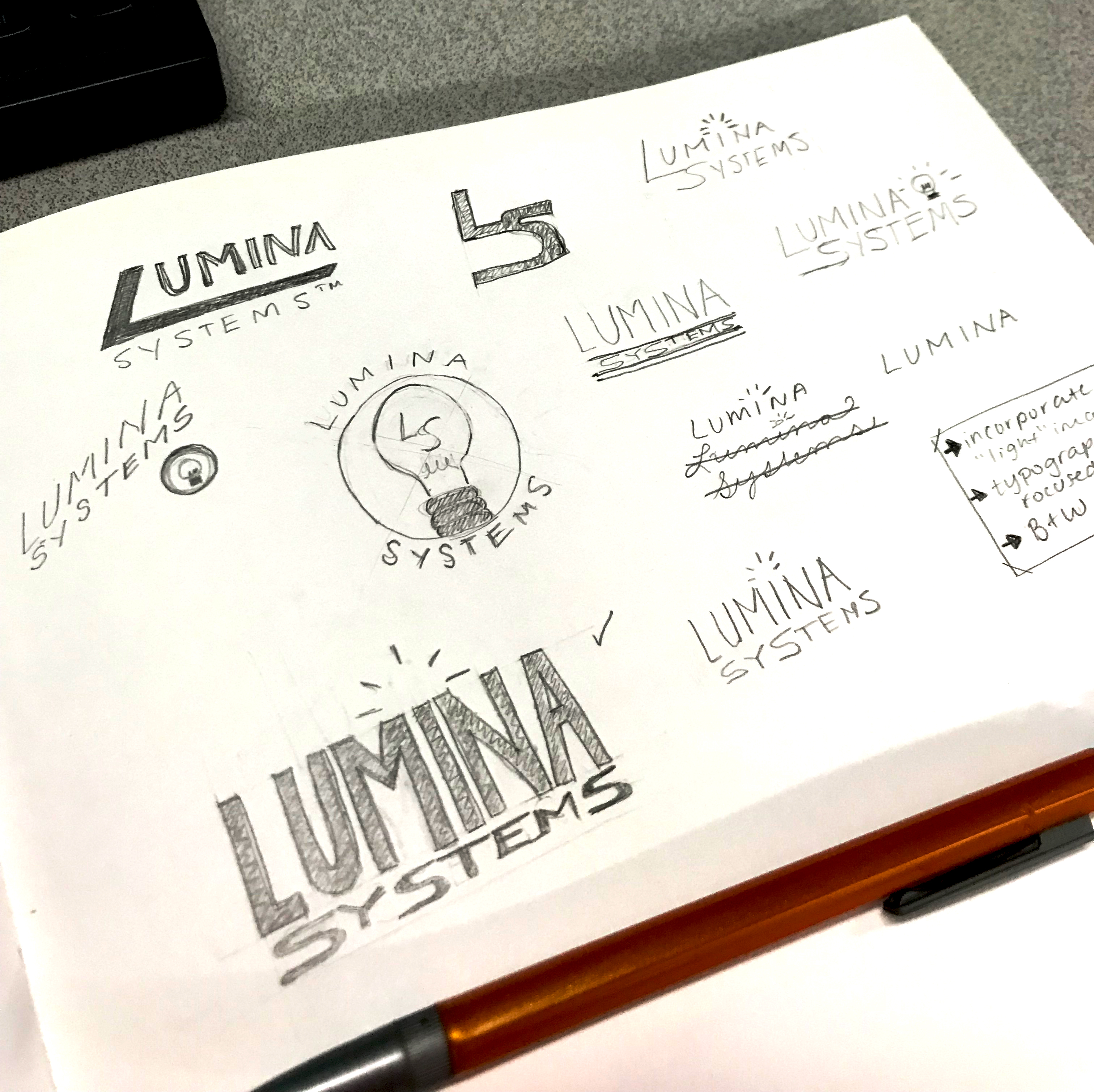
Begin by talking to your client and hearing their needs. Learn about their branding goals and the image they want to establish. You want to know everything about the company that you can. What are their strengths and goals? How do they define their brand and what is their company culture like? Who is their target audience? Once you have a thorough understanding, sit down with the client to agree on a budget and deadline. From there, sketch and sketch some more. Try mind-mapping (visually organizing) your ideas. Put every possible idea onto paper and then hone it down to a few possibilities that you will further develop.

Logo Brainstorming

3. Are There Any ‘Must-Have’ Design Requirements?

All logos are different; there aren’t many widespread requirements, but the best logos are simple and recognizable. We all know the typeface for Coca-Cola, and the Nike “swoosh”, and what those images represent. Every logo is unique but every client requires different branding, so it’s important to know the design rules like a master. Once you get down to the process, you will make better looking sketches and have a better final result.

4. How Do You Choose Typeface + Color?

The optimal strategy when handling elements of style is to consider the form and font first, by working in black and white. It is crucial for your logo to be readable without color, however, colors are very important as they are tied to cultural and emotional values. There is much thought that goes into deciding what colors to use since this aspect most noticeably gives meaning to your design.

5. What Does the Rest of the Process Entail?

Oftentimes you and the client won’t see eye-to-eye about the design or process, so it’s important to immediately establish what the expectation will be. Make sure you know your point of contact, and if a committee will be involved in the final decision, so you’ll know how to communicate properly. Help your clients; make sure you’re able to explain the design process in-depth to all decision-makers and keep them involved as well. A good rule of thumb: always under-promise, and over-deliver. Being able to hit your deadlines and communicate clearly is key to a healthy client relationship. This process depends on communication and trust. You’re still questioning and checking with your client regularly, but it’s important to establish a good relationship from the get-go so that your client will trust you and give you enough creative freedom with the design process.

6. How Long Does the Entire Process Take?

It can take anywhere from a few hours to a few weeks to design a solid logo. Creating something from your client’s concepts is hard work and can often be time-consuming because of the back-and-forth communication. The best designers stick to rigid schedules and let their client know up-front what the process entails before starting the project.

7. What Happens if You Get Stuck?

No matter what, don’t look at too many other logos if you get stuck. Avoid the comparing mind, or you’ll wind up confused and discouraged. It is always good to have inspiration, but the best ideas come from intuition. It generally goes back to understanding the desired brand identity and your client’s target audience, so don’t be afraid to ask additional, clarifying questions. When in doubt, put a pencil to paper.

8. Is it a Good Idea to Buy a Logo Online?

The problem with quick and easy $5 logo sites is that you won’t receive the detailed thought that fuels the creation of a genuinely representative and artistic logo. A logo purchased online will usually be clip art from a stock image company, or at best some amateur work that today’s consumers will not give a second glance. Always choose to work with a trained graphic designer who can deliver quality work rather than using a random website.

A unique logo is a cornerstone of any prominent brand. Logos make up an international language that when designed properly, anyone can understand. Whether you are designing a logo from scratch or re-designing an outdated logo, the process is elaborate. A web-generated symbol will never make headlines or turn heads- it takes time, training, and a comprehensive understanding of the client to produce newsworthy results. If you need help designing or re-designing a logo, contact us at Absolute Marketing Solutions.

You Might Also Like:

Are your employees on social media? Here are some considerations for enforcing a social media advocacy program

Getting your employees to become social media advocates can be a great way to amplify your reach and acquire new customers. According to Brandwatch, 1,000 employee advocates can reach 1 million customers, drive 50,000 social engagements, and create 5,000 unique pieces of content.

Consumers care deeply about endorsements made by their peers and will listen to their friends if they show love of a brand. However, your employees posting content about your restaurant on your behalf might make you nervous. In fact, the first thing you may have thought when reading this blog was, “doesn’t that put control of my brand into the hands of someone else?” Yes, and no. It has been said that branding is what people say about you after you’ve left the room, and in this way, having employees as social media advocates can be the biggest brand endorsement yet. You may own your restaurant, but your customers and your employees create your brand.

Concern: Your employees might not fully understand your restaurant brand identity.

Communicating brand messaging effectively while maintaining a personal tone is not a natural skill for everyone. If your employees’ posts sound forced or insincere in any way, it can harm your efforts. If an employee has a negative experience at their workplace and turns to social media to vent their frustrations, they could damage your reputation.

To solve this, set guidelines and put official processes in place to make sure how they understand how to use the tools responsively and tastefully. Make sure all your staff is on the same page about organizational goals and objectives, so you can all work as a team. Whether your organization decides to post about events, shout-outs, company milestones, individual achievements, or other topics, make sure your staff is trained on how to identify and publish content on their LinkedIn, Twitter, or Facebook channels.

Even if an employee at your restaurant or bar is a stellar bartender or server, they may still need some training on how to effectively express their views, share company content, and build the brand in a way that is aligned with your organization’s overall brand strategy. Having a weekly meeting to go over some of the topics on social media can help your employees feel confident about what they are posting and to ensure that a consistent message is being conveyed.

Concern: Your employees will spend time on their phones instead of working

While a Facebook live video might garner high engagement with your page’s fans, you don’t want your employees using every excuse to check their phone and spend their time on social media instead of focusing on the customers in your restaurant. Training and teaching your employees rules about deciding who, what, and when to post is of importance. Keep a content calendar with important dates visible, so that all your employees understand what’s on the social media menu.

Some restaurants and bars start out a social media advocacy program with a small select group of employees who demonstrate social media savvy, are energized, and passionate about their jobs. Identify and select a few employees at your restaurant to start with, who you know will take the added responsibility seriously and won’t let it get in the way of serving customers or performing other tasks.

Concern: Shares and posts from your employees will sound forced.

This is a huge concern for any brand that engages in a social media advocacy program, and for good reason. You do not want your employees to feel obligated to share content, because if they aren’t into it, it will likely sound insincere. Perhaps they don’t want their friends seeing them post updates about their work. Perhaps they don’t want their personal social life involved with work in any way. They may have different views about privacy in this regard and may elect to keep their social media away from their job.

Make sure when you hire employees that they are aware of the social media advocacy program. Communicate clearly what is expected. If people aren’t on board, do NOT make it mandatory participation. Instead, consider a social brand ambassador program that incentivizes employees to leverage their networks and achieve thought leadership amongst their peers.

For more information about leveraging social media advocacy for your restaurant or bar, contact us at Absolute Marketing Solutions today. We can help you identify concerns with social media employee advocacy and craft a custom solution that works to amplify and accelerate your restaurant’s visibility on social media.

You Might Also Like:

Miné Salkin

Miné Salkin is a multimedia producer with a specialty in marketing, tech writing and digital storytelling.

More Posts

What’s Your Restaurant Brand Personality?

A brief, but definitive guide to determining what characteristics your restaurant brand has.

Brandpersonality is a set of characteristics, often human-like, that are attributed to brands. Having a well-defined and developed brand personality gives consumers the ability to relate to brands and develop an affinity for them over others.

Let’s say you own a sushi restaurant in SoHo. Most of your customers describe your décor as “authentic,” or “eclectic,” and the food is surprisingly delicious for such a modest storefront. Your servers are passionate about providing awesome customer service. It sounds like your restaurant may already have a brand personality defined, but do you know what it is?

Brand Personality Defined

A brand is often defined in the way it presents itself, the language it uses, and the way it behaves. Just like a human being, different personalities achieve differentiation amongst people. Imagine that a brand is a living person, Malcolm. Malcolm is sassy, funny, and very sharp – he has many friends and is liked by others who share his sense of humor – though not everyone appreciates his witty comments. His remarks about social media are popular with people in his age group, but younger and older people don’t really get it. By leveraging advertising, packaging, customer service, and all the other aspects that encompass a brand, a personality is expressed, just like how a person has characteristics that define them and set them apart from others.

If done successfully, your restaurant’s brand personality can increase the value of the brand overall by giving it a consistency that certain consumer segments or groups enjoy.

The 5 types of brand personality

In advertising and marketing, there are five defined personalities that work as a framework to describe a brand. Each dimension is divided into a set of facets that can add depth and complexity to a brand’s overall personality. The five types or dimensions of brand personality are generalized as:

Sincerity – being down to earth, wholesome, unpretentious. Just like the sushi restaurant we invented in this intro.

Excitement – spirited, rebellious, imaginative. Dick’s Last Resort is a chain known for its outrageous, surly employees who dish out plenty of sarcasm and insults to their patrons alongside their fare. Feeling sensitive today? Don’t eat there or you may leave in tears.

Ruggedness – tough, wild, untamed, weathered. Dinosaur BBQ, Outback Steakhouse, and Holy Hog come right to mind.

Sophistication – glamour, romance, intelligence. You’re a 4-star Michelin restaurant atop a high rise building in Manhattan. Your reservations are booked up months in advance.

Competence – responsible, efficient, reliable. Every time I walk into a Panera Bread, I always get the same vibe during my experience.

The five types of brand personality were developed as a framework created by Jennifer L. Aaker in the 1990’s at Stanford, who also concluded in her studies that brand personalities are also derived from what they caused consumers to believe and dream in an aspirational way. According to this model, ruggedness and sophistication are two brand personalities that speak the most to the consumers’ sense of aspiration.

Brand archetypes

BrandZ, a global brand equity platform, analyzed nearly 15,000 brands internationally and identified archetypes for brands that tended to perform better than others.

restaurant_brand_personalityFor instance, some of the most inspirational personality archetypes include the Explorer – brands such as Jeep, GoPro, and Red Bull encompass the philosophy that “where’s there’s a will, there’s a way.” Other successful archetypes that have a profound effect on consumers are the Hero archetype. Think of brands such as Nike, TAG Heuer, the brands that let consumers overcome obstacles, slay dragons, and bring out the best in themselves and others.

How to choose your restaurant brand personality

While you may aspire to have a certain brand personality or archetype, first understanding your audience and values is of paramount importance in defining your brand personality. As a restauranteur, you’re familiar with the power of your restaurant’s atmosphere. Your dining room is not just a place to buy and eat food. It’s an extension of your restaurant’s brand personality. Consider what your restaurant offers that truly distinguishes it from the rest, and how your audience perceives it.

Brand personality is the summation of all the consumer’s experiences with the brand. It is unique and long-lasting. To learn more about developing your restaurant brand personality, contact us at Absolute Marketing Solutions and discuss our Tampa brand identity and design services. We can help you shape your restaurant’s brand personality to achieve success in the highly competitive hospitality industry.

You Might Also Like:

Miné Salkin

Miné Salkin is a multimedia producer with a specialty in marketing, tech writing and digital storytelling.

More Posts