National Homeless Persons’ Remembrance Day

As of February 2021, the number of homeless in downtown Tampa hit a high of 1,650 people. Although the city has been working to provide shelter, food, and hygienic products to the homeless, many still struggle to survive. However, Hyde Park United Methodist Church has made efforts to support homeless initiatives through its non-profit organization, the Portico. On National Homeless Persons’ Remembrance Day, we honor the work that our client, the Portico, has done to recognize those who face homelessness in our community and those who have died without a home.

The Portico Cafe:

The Portico Cafe is a social enterprise that helps bridge people battling homelessness, addiction, and incarceration with employment opportunities. Many of the cafe’s employees have taken his opportunity as a second chance to rehabilitate their lives and reconnect with community members. In addition, the cafe offers many different breakfast and lunch options for customers to order. These funds directly support the Portico’s events and initiatives. For more information about the cafe and its employees’ stories, please visit their newly renovated website here. 

Portico Housing Solutions:

The Portico Housing Solutions provides safe housing for those transitioning into a new life. In exchange for accommodation, tenants are encouraged to give back to the community, attend church services, and develop a savings account that can be upheld after completing the program. The Portico Housing Solutions also offers mentoring and spiritual support for its residents provided by Hyde Park Methodist Church. Their goal is to support and transform the lives of the homeless. 

Love INC:

Located on the third floor of the Portico, Love INC is a group of volunteers that provide the homeless with necessities such as food, water, and clothing. They differentiate themselves from other organizations by also bringing love, wisdom, and religion to individuals in need. Their mission is to mobilize local churches to transform lives and communities in the Name of Christ.

Homeless Memorial:

Outside the Portico campus is a homeless memorial that honors those who have died on the streets of Tampa. The wall is edited each year with the names and ages of each person who has passed. The Portico works hard to recognize the strength and lives of the homeless as they have documented over 115 names to date.

Homeless Jesus:

Timothy P. Schmalz, a Canadian sculptor, best known for his religious art pieces, created the well-known Homeless Jesus Sculpture outside the entrance of the Portico campus. This prominent figure depicts a distressed Jesus sleeping on a park bench. Many people in passing have stopped to take a second glance at the realistic statue once they have recognized the sleeping man’s face. These actions have fulfilled the artist’s intentions of acknowledging those who are homeless and acknowledging that Jesus is with everyone.

To help the Portico’s many efforts in preventing homelessness around the Tampa area, please visit https://theportico.org/ to learn more about how you can get more involved.

If you are interested in working with Absolute Marketing Solutions for your marketing needs, contact one of our team members today.

Creating the Right Culture for your Restaurant

Sharing is caring!

We all remember the sitcom Cheers, set in a Boston bar where “everybody knew your name.” Many of us have a restaurant or bar in which we feel at home. Something about the place brings us back time and time again. We may not be able to put our finger on it, but the reason is likely culture. It has been long understood that culture attracts customers. What has been less understood is how to cultivate a culture that works profitably for your restaurant.

WHAT IS CULTURE?

A buzzword as of late, the definition of culture is not always made clear. We believe that culture is the foundation of your brand and the way you demonstrate your values to both employees and customers. Culture can be good or bad; it is a purposeful, or accidental, representation of the interactions in your restaurant. Creating a valuable culture is more than a marketing tactic, it can impact every aspect of your business and stand the test of time. Culture involves everything from a restaurant’s vision and concept, to its language and style, and once established effectively has been proven to increase employee engagement, customer service, and profits- not marginally, but considerably.

WHY DOES CULTURE MATTER?

According to restaurant marketing specialist Alfred Goldberg, “culture influences how people make decisions as it establishes how we do things and why. Whether it’s a big strategic decision or an everyday task, culture ensures that everyone knows what is expected of them.” Culture, brand, and service coincide, together dictating the types of people that walk through the doors and whether or not they will return. It doesn’t matter how mouthwatering your food is, if your culture doesn’t shine, interest from employees and patrons will decline. According to a Gallup report, engaged employees are more likely to improve customer relationships, which results on average in a 20% increase in sales. Happy, engaged employees lead to happy, engaged, repeat customers. Now that we’ve established the importance of the right culture, let’s talk about creating it.

HOW CAN YOU CREATE THE RIGHT CULTURE?

Culture should be established by the highest level of authority; it is only effective when personified by owners and employees alike. According to Chris Edmonds, a best-selling author and culture expert, “leaders must create a culture where values – how people treat each other – are as important as results, every day.” Edmonds advises defining the desired culture by creating an organizational constitution. The constitution should detail the most important standards of service and behavior that support the restaurant’s overall purpose.

HOW CAN YOU RETAIN THE RIGHT CULTURE?

Defining the desired culture is the easy part. The hard part is upholding all choices and actions to your original standards. Keep culture in mind from the start; hire and fire based on your organizational constitution. Since it can be so challenging to develop the right culture, when a restaurant does so, people are quick to take notice. One Tampa-based restaurant corporation that has done so is Ciccio Restaurant Group.

CICCIO RESTAURANT GROUP CULTURE

If you’re in Tampa, you know Ciccio Restaurant Group. CRG began as one restaurant, with one concept, and a well-defined culture. Now, with ten different restaurants and counting, CRG has spread throughout Florida, with varying concepts, but the same culture that they started with. Senior Brand + Training Director, Tara O’Neill, described their culture with us in an interview:
Tara O’Neill

Describe your company culture in 3-5 words.
“Open-minded, imaginative, collaborative, approachable, generous.”

How are your employees impacted by your culture? How are your guests?
“First and foremost, I have to respectfully make a correction here… we don’t have employees. By definition, an employee is a person that is merely employed for wages or salary. We have a team. Our purpose as a team is to come together to achieve a common goal. What is our goal? Bringing great, affordable, real food to our communities.
Our team members are impacted by our culture every day. Our culture is one that not only accepts people as they are…we celebrate them… just as they are. In whatever form and from whatever walk of life, we believe that everyone has something unique to contribute. Part of our role is to help put them in a position where they feel passion, purpose, and where they can excel. When our team feels happy and inspired, that translates to our guests. And, we feel like our guests DO feel it. Particularly here in our home market of Tampa, the synergy along Howard Ave is amazing. It’s not always the norm that a restaurant group has fans. And, we feel so grateful and humbled by the fact that we do. It’s not something we take for granted. Not even for one day.”

How do you ensure that all CRG stakeholders are positively affected by culture?
“So, one of the things we pride ourselves on being is a company of partners. And this doesn’t just mean a bunch of outside investors. This means real partners in our locations, operating our restaurants and engaging daily with our teams and guests. Most, if not all, of our general managers are actually partners in our locations with shared ownership. Because of our collaborative nature, we want them to have a voice. And, because they are truly business owners, they have the opportunity to share in the wealth of all of our successes. Our team members are some of our most important stakeholders. We want to provide a place for our team members to grow, excel, and be able to build long-term wealth.”

Would you agree that CRG has created a positive reputation based on the culture?
“Absolutely! I think that we have been so fortunate not only in our home market of Tampa but in other markets that we’ve expanded to because of the deep-rooted culture in our team members that live it. We rely on them to carry the torch no matter where they work. And from a community perspective, part of our culture means continuing to pay our gratitude forward by giving back as much as we can.”

How does your culture keep a competitive edge? How do you keep everyone continuously engaged?
“Culture in and of itself to us isn’t about having a competitive edge. It’s about remaining true to who we are, and through our evolution, never forgetting to stay grounded and remember our reason. One of the biggest things we look for when we hire is whether or not the team member seems to be a cultural fit. That’s one of the most important things we can do from a recruiting standpoint. When people align with our values, the engagement happens organically. And from there, we just continue to nurture and celebrate the partnership.”

Although there is no single path to generating a culture that turns employees and customers into loyal fans, looking at successful brands like those owned by Ciccio Restaurant Group can offer some valuable lessons. Culture encompasses purpose, customer service, attitudes, and values, and it is up to the leaders of the company to decide what type of culture they want to put forth and how. These leaders must do more than decide, they must hold themselves accountable as equal team members and consistently act based on the values set.

We hope these tips help to ensure that your restaurant has the right culture. If you’d like more information on restaurant culture or how to align your culture with your digital marketing, sign up for our E-newsletter or contact us directly at Absolute Marketing Solutions.

You Might Also Like:

Phoebe

A recent graduate from the University of Tampa, Phoebe brings an understanding of journalism, PR, advertising & branding to the Absolute team. Her extensive customer service and cross-cultural communication experiences give her insights into various perspectives.

More Posts

Discussing Digital Marketing Acronyms

Sharing is caring!

Have you heard the terms SEO, SEM, or PPC being used casually in a business meeting or conversation? It’s easy to nod along, never admitting that you don’t know what these acronyms mean. That’s okay. We’ve compiled a list that explains what these basic marketing terms, so you can feel empowered to use them and make informed business decisions. 

seo_acronym

SEO 

SEO stands for search engine optimization. Effective SEO gradually improves the online visibility of a website or brand through organic, or unpaid, results. SEO involves processes like keyword research and link building. A focused SEO strategy can increase the quality and quantity of incoming traffic to certain website pages. Google, Yahoo, and Bing are the most significant search engines in western countries and they operate using algorithms that calculate what and how to display the most relevant search results. These algorithms change frequently, and it’s essential to work with an SEO specialist who stays informed of these developments. Failing to adhere to updates can negatively impact a website’s visibility. 

In the past, devious individuals learned to bypass and shortcut the ranking process through what we call “Black Hat” aka Spamdexing techniques – such as buying links from link farms, keyword stuffing in pages, hiding words in invisible fonts, and other deliberate manipulations of search engine indexes. Search engines like Google caught onto this pretty quickly and started penalizing websites who weren’t playing by the rules. At Absolute, we deploy genuine strategies to develop effective organic marketing that will generate qualified leads for our clients. 

If you want to learn more, visit our page to read about our services and our successes in building SEO strategies for our clients in Tampa Bay and beyond. 

SEM 

On the other end of the digital marketing spectrum, we have SEM: search engine marketing. SEM includes paid placements, banner advertisements, or anything using Google AdWords which can generate positive results for businesses and brands. Paid activities in the digital marketing world include PPC, CPC, or CPA ads – don’t panic, we’ll explain in a second. 

SEM can be a powerful marketing tool for brand awareness and lead generation. Depending on the industry landscape, the efforts of competitors, and the cost of ads, we recommend a targeted SEM campaign to complement ongoing SEO and maintain momentum for your business. 

search_engine_marketing

PPC 

PPC stands for pay-per-click, a popular form of paid advertising via Google AdWords and other third-party platforms. These ads allow you to set a limit for the amount you’ll pay per click. This makes it easy to forecast how many clicks you’ll receive within your allotted budget. 

PPC is a powerful tool because you can bid for high placements and get an immediate return on investment (ROI). Ads appear above organic search results, and users are highly motivated to click them since they’re often searching for a specific product, service, or answer. 

CPC 

CPC means cost per click; every time an ad gets clicked, it costs money. CPC tells advertisers the exact price of each click on a particular ad. 

After running a campaign, you’ll be able to see the average CPC and then test variables such as keyword selection, ad copy, position in the ad space, and other factors accordingly. Keep in mind that depending on your competition, keywords can be expensive. For instance, a personal injury attorney or an insurance company should expect to pay double, if not triple, for a single click on their ad compared to niche companies.  

CPA 

CPA can be a useful form of advertising for a business owner who is focused on how much a new customer costs to acquire. The acronym stands for cost-per-acquisition and refers to exactly that: the cost to get a new customer.  

Search Engine Land conducted an extensive study in 2016 and published an article outlining the industry averages for CPA by analyzing more than 2,000 clients in all verticals. They found that the average CPA in AdWords across all industries was $59.18 for Search and $60.76 for display. The CPA’s across industries varied greatly, however, with legal services being a top CPA industry at a whopping $135.17. For more industry benchmarks, check out their article here. 

CPM 

If you want to venture into paid advertising, another option you have is to go with CPM as a cost model. As opposed to CPC, where you pay each time someone clicks on your ad, CPM stands for cost per mille (one thousand impressions). You set a budget based on how much you want to pay to have your ad shared with one thousand viewers, readers, or listeners.

CTR 

You may have heard of marketers talking about CTR, which stands for click-through rate. It’s typically expressed as a percentage because it represents the number of users who clicked on an ad compared to the number of users who solely saw the ad. For example, if you created an ad on Facebook that reached 12,000 people, and 120 people clicked, then your CTR would be 1%. 

Many of our clients ask “what is a good CTR?” however, that question is highly subjective. The higher, the better, but it will vary based on industry and competition. In a study conducted by Wordstream, the average CTR in AdWords is 1.91% on the search network, and 0.35% on the display network. For more information about average CTR’s by industry, visit the guide here.

CTA 

In the marketing world, CTA stands for call to action. This is a specific instruction given to your reader. It may encourage calling, clicking, buying, or subscribing. Successful CTAs rely on the persuasiveness and quality of the copy, the value of the promotion, and the price. Make sure to work with an experienced copywriter to develop powerful CTAs.  

MoM 

No, MoM has nothing to do with your mother, or how she may or may not be made of money. MoM is a key performance indicator (KPI) that stands for month-over-month. MoM can be a measure of growth, market traction, business expansion, or any other rates of change. It’s a particularly useful metric for businesses and organizations that are based on monthly subscriptions or memberships.  

If you’re still perplexed, contact the marketing team at Absolute Marketing Solutions. Starting with a free consultation, we’ll put together a strategy to help your business achieve digital success. Call us today at (813) 908-6862. 

You Might Also Like:

What’s Your Restaurant Brand Personality?

A brief, but definitive guide to determining what characteristics your restaurant brand has.

Brandpersonality is a set of characteristics, often human-like, that are attributed to brands. Having a well-defined and developed brand personality gives consumers the ability to relate to brands and develop an affinity for them over others.

Let’s say you own a sushi restaurant in SoHo. Most of your customers describe your décor as “authentic,” or “eclectic,” and the food is surprisingly delicious for such a modest storefront. Your servers are passionate about providing awesome customer service. It sounds like your restaurant may already have a brand personality defined, but do you know what it is?

Brand Personality Defined

A brand is often defined in the way it presents itself, the language it uses, and the way it behaves. Just like a human being, different personalities achieve differentiation amongst people. Imagine that a brand is a living person, Malcolm. Malcolm is sassy, funny, and very sharp – he has many friends and is liked by others who share his sense of humor – though not everyone appreciates his witty comments. His remarks about social media are popular with people in his age group, but younger and older people don’t really get it. By leveraging advertising, packaging, customer service, and all the other aspects that encompass a brand, a personality is expressed, just like how a person has characteristics that define them and set them apart from others.

If done successfully, your restaurant’s brand personality can increase the value of the brand overall by giving it a consistency that certain consumer segments or groups enjoy.

The 5 types of brand personality

In advertising and marketing, there are five defined personalities that work as a framework to describe a brand. Each dimension is divided into a set of facets that can add depth and complexity to a brand’s overall personality. The five types or dimensions of brand personality are generalized as:

Sincerity – being down to earth, wholesome, unpretentious. Just like the sushi restaurant we invented in this intro.

Excitement – spirited, rebellious, imaginative. Dick’s Last Resort is a chain known for its outrageous, surly employees who dish out plenty of sarcasm and insults to their patrons alongside their fare. Feeling sensitive today? Don’t eat there or you may leave in tears.

Ruggedness – tough, wild, untamed, weathered. Dinosaur BBQ, Outback Steakhouse, and Holy Hog come right to mind.

Sophistication – glamour, romance, intelligence. You’re a 4-star Michelin restaurant atop a high rise building in Manhattan. Your reservations are booked up months in advance.

Competence – responsible, efficient, reliable. Every time I walk into a Panera Bread, I always get the same vibe during my experience.

The five types of brand personality were developed as a framework created by Jennifer L. Aaker in the 1990’s at Stanford, who also concluded in her studies that brand personalities are also derived from what they caused consumers to believe and dream in an aspirational way. According to this model, ruggedness and sophistication are two brand personalities that speak the most to the consumers’ sense of aspiration.

Brand archetypes

BrandZ, a global brand equity platform, analyzed nearly 15,000 brands internationally and identified archetypes for brands that tended to perform better than others.

restaurant_brand_personalityFor instance, some of the most inspirational personality archetypes include the Explorer – brands such as Jeep, GoPro, and Red Bull encompass the philosophy that “where’s there’s a will, there’s a way.” Other successful archetypes that have a profound effect on consumers are the Hero archetype. Think of brands such as Nike, TAG Heuer, the brands that let consumers overcome obstacles, slay dragons, and bring out the best in themselves and others.

How to choose your restaurant brand personality

While you may aspire to have a certain brand personality or archetype, first understanding your audience and values is of paramount importance in defining your brand personality. As a restauranteur, you’re familiar with the power of your restaurant’s atmosphere. Your dining room is not just a place to buy and eat food. It’s an extension of your restaurant’s brand personality. Consider what your restaurant offers that truly distinguishes it from the rest, and how your audience perceives it.

Brand personality is the summation of all the consumer’s experiences with the brand. It is unique and long-lasting. To learn more about developing your restaurant brand personality, contact us at Absolute Marketing Solutions and discuss our Tampa brand identity and design services. We can help you shape your restaurant’s brand personality to achieve success in the highly competitive hospitality industry.

You Might Also Like:

Miné Salkin

Miné Salkin is a multimedia producer with a specialty in marketing, tech writing and digital storytelling.

More Posts

“Siri, what restaurants are near me?” How to break into local SEO for restaurants

Like many restaurateurs, you probably see a lot of new faces in your restaurant every week. But where are all these new diners coming from? Most restaurateurs we have spoken to believe the adage that “the only marketing a restaurant needs to do comes from the kitchen,” and that word-of-mouth is responsible for bringing in most new customers. As catchy as that sounds, it isn’t necessarily so.

Right now, you may be thinking “Who cares how they found us? As long as they come in and eat.” The answer is simple: if you don’t know where your customers are coming from, then you have no hope of controlling how effectively you attract new customers. We have yet to meet a restaurant that didn’t want to attract new customers.

For the past two decades, study after study has demonstrated that the internet has surpassed all other means by which people discover restaurants. If you have not considered how and where your restaurant appears in search results (if it appears at all), you may be losing opportunities to create new customers and increase your local visibility. Local SEO is the marketing tactic that puts your restaurant in front of consumers when they are deciding where to dine.

Are you interested now? Let’s dive in deeper and learn a little more about what trends are driving the need for Local SEO and how to use it to drive more customers to your restaurant.

Why Local SEO is Important

Location, Location, Location

It has long been a restaurant maxim that the three most important decisions when opening a restaurant are location, location, location. Unless you are a destination restaurant, customers will not travel far to visit you. According to Brightlocal, the average time a consumer is willing to spend traveling to get to a restaurant is 17 minutes, which in most cities could represent just a few miles. This means that the majority of your customers are likely in a limited geographical area, or in other words, “local.”

According to research conducted by SinglePlatform, 75 percent of consumers say they frequently choose a restaurant based on local search results.

“Siri, I Want Tacos”

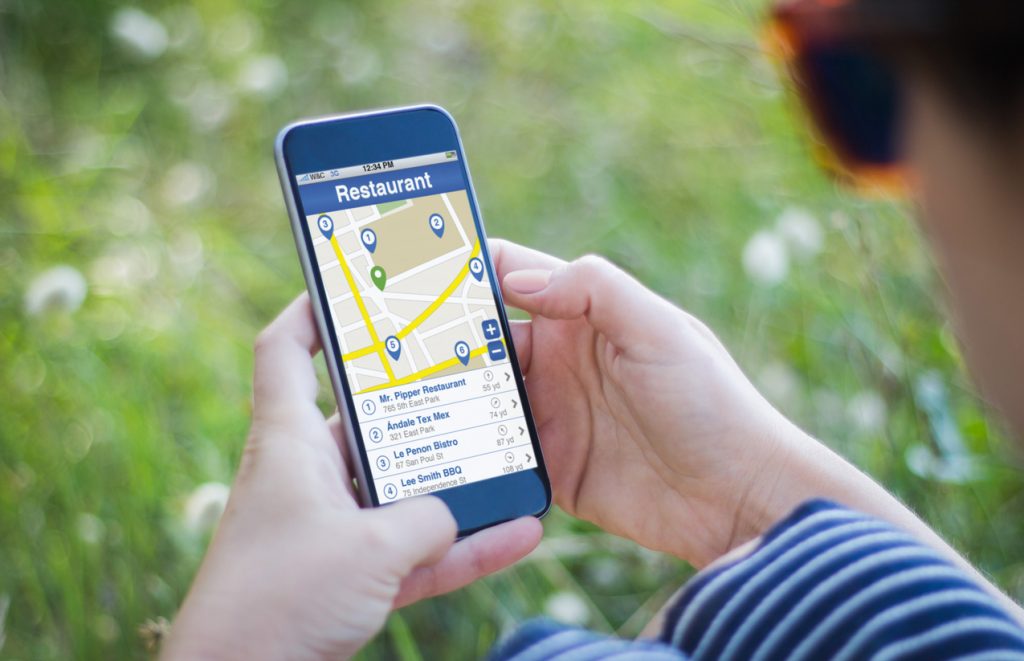
Most local searches are conducted on mobile devices, a trend that has only increased since the release of digital assistants such as Siri, Google, and Bixby. This “voice search” technology allows users to request information and the device searches the internet for the best response. When a user makes a request such as “I want tacos,” the device assumes that the intent is to find nearby taco restaurants. When your customers ask their phones for tacos, does it send them to you or someone else?

What is Local SEO?

Local SEO encompasses several activities aimed at helping businesses promote their products and services to local customers. Whether you are a single restaurant or a multi-location chain, local SEO can help customers find your location at the moment they are most likely making a dining decision.

There are several elements to an effective Local SEO effort, including directories and citations, reviews, website optimization, and local link building.

Directories and Citations

Citations are defined as any online mention of your business name, address, and phone number. You may find citations listed in local business directories, social media platforms, or websites and apps. The purpose of citations is to help users find local businesses in their area. Citations also influence the results you may see on local search engine rankings like Google Maps or Bing Places. For this reason, you should make it a habit to manage your business’ citations to ensure that they’re accurate.

Since the number of citations for your business has an impact on Local SEO, your restaurant locations should be listed on as many local and industry directories as possible. This is easier said than done, as there are typically dozens of directories with new ones emerging almost daily. There are at least 13 core local citation websites in the U.S. that you must be listed on.

Here is a list of just some of the directories for restaurants to be listed in:

  • Acxiom
  • Apple Maps
  • Bing
  • Citygrid
  • Facebook
  • Factual
  • Foursquare
  • Infogroup/ExpressUpdate
  • Localeze
  • Superpages
  • Yahoo!*
  • YP/Superpages
  • Yelp
  • Google My Business
  • TripAdvisor
  • Allmenus
  • Urbanspoon/ Zomato
  • Manta
  • Indeed
  • BBB

There are three main ways to perform citation management, manually, semi-automated, and automated. In manual citation management, you manually build and manage your citations. This is extremely time consuming and error prone. For this reason, we do not recommend this approach. Semi-automated citation management occurs when a firm uses an automated service to manage some citations while building and maintaining others manually. This service is provided by a number of vendors and is one we often employ for our clients. Automated citation management is wholly automated by service providers such as Moz Local or Yext. This can be the most cost-effective method of citation management.

If you decide to choose a semi-automated or fully automated local citation service, make sure to ask the service provider what happens should you decide to cancel your service in the future. Some vendors will claim ownership of your citations, which means you will have to go through the process again if you terminate your contract with them.

Optimize your citations

In addition to the number of citations your location may have, it is important and vital that your citations are accurate (and consistent). You should pay special attention to the Name, Address, and Phone (called the NAP), and make sure they are spelled EXACTLY the same way as they are listing on your Google My Business profile. If you fail to remain consistent, it may result in duplicate listings, which could negatively affect your local rankings. This is because Google recognizes it as two different addresses and will believe that you are two different businesses instead of consolidating it into one. You should consider your customer as well, as you want them to easily find you online and know where you’re located. Don’t confuse or frustrate them with multiple listings of your business.

Regardless if you choose the manual, semi-automated or fully automated citation management system, you will always want to maintain consistency with every citation. Optimize each listing with additional information such as business hours, contact information, photographs, and other useful pieces of information to the user. Remember to update the listings frequently, and have a system or process in place should you need to change them.

Reviews, Reviews, Reviews

Did you know that Google will serve restaurant results with the highest reviews and closest proximity in a local search? According to a collection of online review stats by Vendasta, star rating is the number one factor used by consumers to judge a business.

While that may be specifically tied to your rating on your Google My Business page, the more positive reviews across a various number of review websites, the better. Consumers are heavily influenced by online reviews and for a good reason. Quality, frequency, and variation are what customers are looking for. Here are a few stats from Vendasta’s series that are of particular interest to restaurant owners.

  • 92% of consumers read online reviews
  • 88% trust reviews as much as personal recommendations
  • 95% of consumers suspect censorship or faked reviews when they don’t see bad scores

As you can imagine, it’s important to have a system and policy in place for handling customer reviews. For the positive ones, always make sure to thank the reviewer for their input. For negative reviews, always acknowledge them so that your audience can see that you care and are responsive. Next, try to take the conversation offline by directing them to a survey form, email, or phone call, depending on the nature of the complaint. For more information on how to handle negative online reviews, please visit our blog here. (link to how to handle customer complaints)

Is your website optimized?

There are several on-page SEO factors that play a role in helping or hurting your restaurant from ranking locally. Having a footer with your NAP displayed is highly recommended to make sure your contact info is consistent with your online citations. If your business has multiple locations, building a relevant landing page for each of them would be a best practice as well.

As for the specifics on your website, there are some parameters you can edit to get the most local SEO oomph. Let’s imagine that you operate Bernini’s, a fictitious Italian-style pizzeria in Hyde Park in Tampa. We recommend optimizing the following:

Page Title– This is the title of the page that the user will view on Google’s search results. In this case, we’d recommend you change it to something like, “Bernini’s Pizzeria | Authentic Italian Pizza Serving Hyde Park since 1981.” Try to summarize your business with as much information as succinctly as you can, so that the user can understand where you are and what you offer by taking a few seconds to read it.

H1 – This is the main headline of the page, and should describe what the user will find.  An appropriate H1 could be, ‘Bernini serves Italian-Style Pizza in the Heart of Hyde Park.’

URL/ Slug – WordPress allows you to edit the slug of a webpage so that you can include keywords as well. You should include the name of your restaurant, in addition to your location. For example, this is the text in the address bar containing the website name, ‘www.berninisitalianpizza/tampa-pizza.’

Page Content – Here you have a blank page to tell the reader (and Google) what your restaurant is all about. Be sure to include your target location, in addition to relevant keywords. You should aim for 300-500 words here, but make sure the content is valuable to the reader.

Meta Description – Under your page title in the search results, you have a snippet of text available to describe what users will find on that given page. In December 2017, Google officially expanded its snippet length from 160 to 230 characters. In your meta description, be sure to provide a brief description of your business, location, at least one important keyword, and a call to action!

Local link building

If you ask any SEO, link building is one of the most important components of a successful SEO strategy. Link building involves acquiring links back (backlinks) to your website from high quality and relevant websites. The more links you receive from trustworthy and authoritative websites, the more trustworthy and authoritative your website will appear. Google’s (and other) search algorithms weigh backlinks very heavily when determining rankings. Since newspapers, magazines, and niche publications are typically both trustworthy and authoritative, receiving backlinks from this sort of publication can help your website rank higher for local searches. You should also reach out to bloggers and writers in your area to be featured on their local blogs and publications. Link building can be a very time consuming endeavor, but it is crucial for increasing your ranking in local search results.

Getting in a local pack can be very challenging, depending on your local competition and your digital marketing efforts to date. However, it’s not impossible. Developing a strategy to improve your restaurant’s local presence is a multi-step journey that takes time and cumulative effort. To get started on a local SEO strategy to boost your restaurant’s local visibility, contact the Tampa local SEO experts at Absolute Marketing Solutions by calling 813-908-6862. We’ll craft a unique digital marketing plan that addresses your business’ objectives and goals.

You Might Also Like:

Miné Salkin

Miné Salkin is a multimedia producer with a specialty in marketing, tech writing and digital storytelling.

More Posts

5 New Years’ Resolutions Your Restaurant Should Have

Every year, millions of Americans decide to make a list of ways to improve themselves in the new year. Whether it’s to drop a few pounds, land a dream career, or take a vacation to a bucket list destination, many people have dreams and aspirations.

As a restaurant owner, you’ve probably made a few resolutions in the past. A resolution to make more profit. A resolution to improve customer retention. A resolution to decrease employee turnover. Just like the will to lose weight, the motivation from new year’s resolution starts out strong, but can fizzle out after a few months when we go back to our normal habits and behaviors.

Sounds familiar? You’re not alone. While it’s human nature to always want to improve oneself, some goals need to be broken down into steps to be properly managed and executed.

New Year’s resolutions have a reputation for being hard to keep, but consider how successful your restaurant could be if you set achievable goals and reached them in 2018. At Absolute Marketing Solutions, we’ve worked with clients in the restaurant and hospitality industry achieve their goals that lead to revenue-boosting outcomes. Here are some New Year’s resolutions you should make for your restaurant, and how to nail them.

Improve your website

Does your restaurant order delivery or take out? If so, can guests order on your website? Over 57 percent of guests order from a restaurant online daily, weekly, or monthly. If your website isn’t mobile-friendly or responsive, then you could be sending customers to other restaurants.

Quite often, your website is the first impression that a potential customer has of your restaurant. Mouthwatering photos, detailed contact information, and a good user experience are all ingredients required to make a positive first impression. This is your best chance to encourage them to call, make a reservation, or order online.

>>Related post! To learn more about responsive web design for restaurants, visit our blog about 5 features your restaurant website must have in 2018.

Tidy up your local listings

Local listings are important for restaurant owners because listing mistakes can increase customer frustration and fewer visitors to your restaurant as they can negatively impact your local search rankings. Local listings and directory citations management can be a time-consuming process, so you may wish to enlist the help of an agency to manage it for you. For more information about restaurant listing and citation management, visit our local SEO services page and get a FREE powerlistings test!

Be a better listener

Part of creating a New Year’s resolution is to assess oneself and come to terms with your strengths and weaknesses. No matter how hard you or your staff may work at providing a world-class experience at your restaurant, not every customer will walk away satisfied. Reputation management is an ongoing process of reviewing and replying to your customers’ and critics’ likes and dislikes in a way that shows that your restaurant is a customer-centric brand. You do this by demonstrating a will to resolve problems and a desire to make the customer happy. Analyze the nature of your customers’ comments and sentiments, as it may indicate root issues that need to be addressed. If you need help putting together a reputation management strategy for your restaurant or business, we can help. Learn more about our Tampa reputation management services by visiting our page here.

Help your customers nail their resolutions

The chances are that your customers made resolutions too. Consider making changes to your menu such as offering lunch-sized portions for dinner, offering low-fat or low-carb substitutes for other menu items, and different ways to help your customers curb their caloric intake. Your customers will likely appreciate the flexibility in their ordering options, and it will motivate them to make healthier choices. If you offer smaller portions on your menu, it could also reduce the amount of food waste your establishment produces. As far as we can see, this is a win-win-win situation for everyone!

Partner with another business in your community

As always, you should aim to create meaningful partnerships with related brands in your community to increase brand awareness, and strengthen your position in your city. Let’s consider for a moment that becoming a health-focused restaurant is your business objective, and you want to partner with a local gym to offer discount and benefits for its members. You could create a campaign that rewards your customers with a discount to join that gym, and offer the gym’s patrons a discount at your establishment too. This may allow you to brand yourself as a health-focused eatery and attract a new clientele you otherwise would not have been exposed to.

Whether you need a website facelift, a local SEO audit of your directory listings, or a crash course on reputation management, your restaurant can benefit by paying closer attention to its digital presence. Make 2018 your year and take control of your restaurant’s presence online. Contact the team at Absolute Marketing Solutions today to get started!

You Might Also Like:

Miné Salkin

Miné Salkin is a multimedia producer with a specialty in marketing, tech writing and digital storytelling.

More Posts

6-Step Security Checklist for Social Media

Best practices for restaurant owners & operators

Social media marketing for restaurants offers enormous benefits to increase profits and build brand awareness. While many clients may tend to focus on messaging, promotions, and growing their brand awareness, there are also a few critical housekeeping tasks that should be done properly to ensure that you maintain ownership of your brand and social media properties.

In addition, businesses must also be concerned with security with regards to their online presence. In this blog, we uncover the 6-foolproof steps to securing your social media channels. If you have yet to set up your social media channels and want some in-person guidance, contact the Tampa social media marketing team at Absolute Marketing Solutions today!

Identify compromises

For businesses as well as individuals, they may not recognize that they have been subjected to a case of an online breach. Perhaps you’ll discover that your Facebook business page contains posts that you didn’t publish, or a customer will tell you that you sent them a strange message. These are all familiar scenarios for businesses that have been compromised, but the first step is in recognizing where the compromise has occurred.

Websites such as haveibeenpwned.com allow you to search for a username or e-mail and check if they’ve been compromised by a data breach. The site also provides information as to the name and date of the breach. This can be useful if you monitor your email accounts closely, and you can even set up an alert to be notified. If you are the subject of a breach, make sure to change your password immediately, and remain vigilant if you see anything posted on your behalf without your consent.

Verified accounts

Verified accounts are social media accounts whose source, name, and identity have been confirmed and vetted by the social media platform. Donning a special badge, it represents that the profile is trusted by Facebook, Twitter, or wherever it appears.

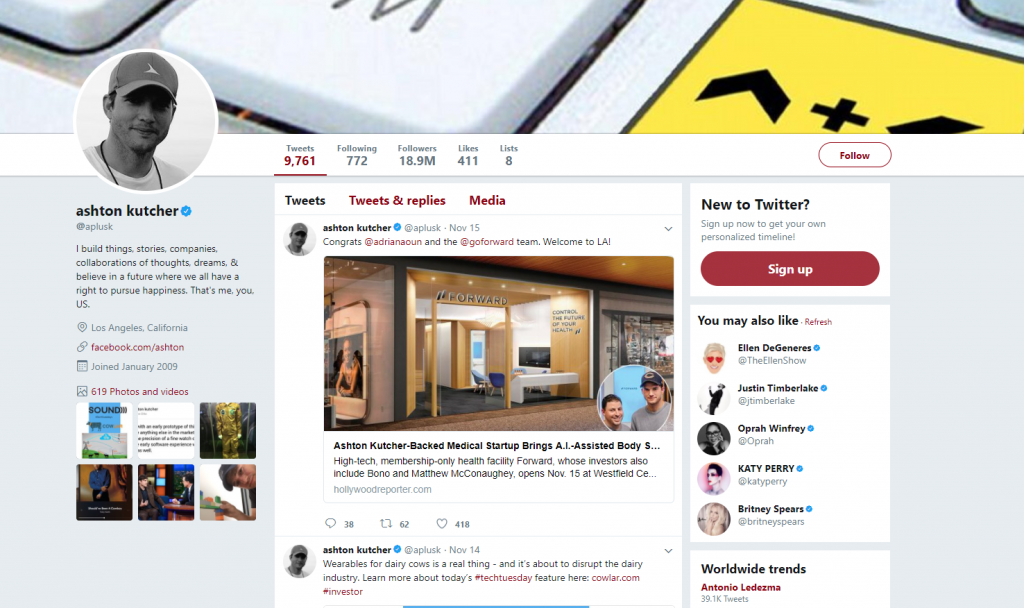
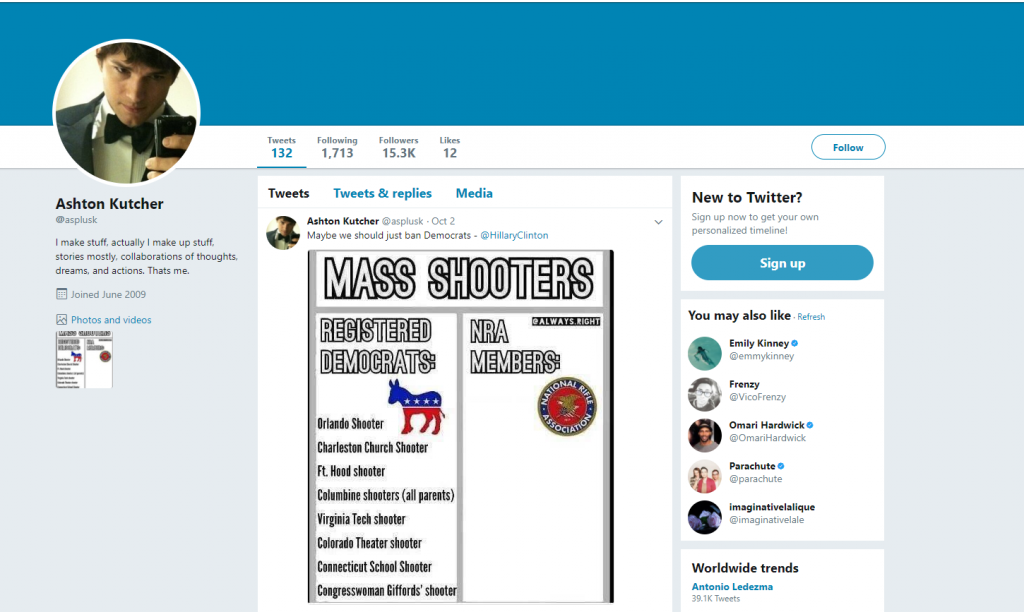
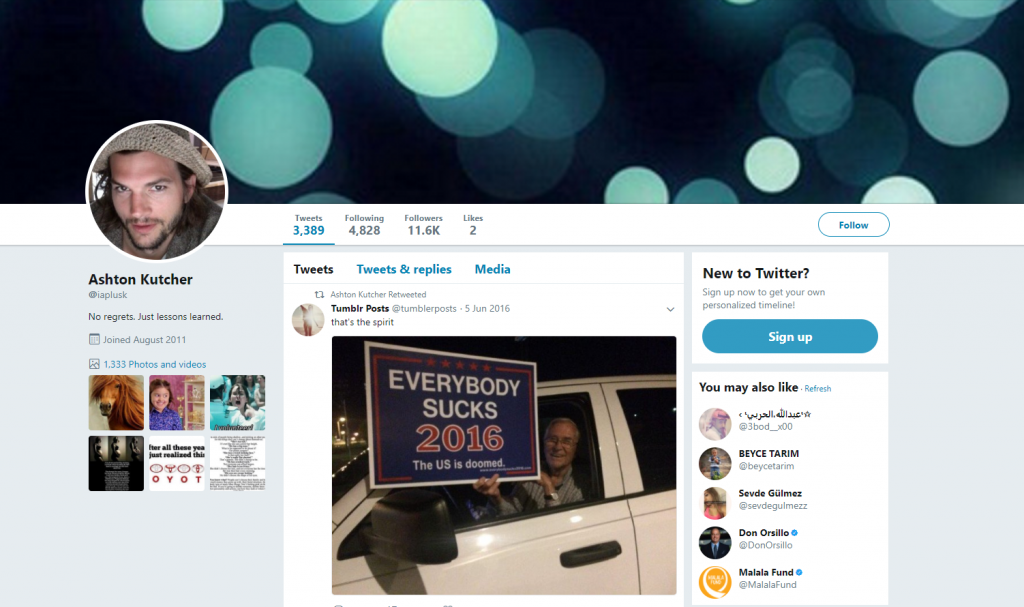
While many celebrities deal with impersonations, brands and restaurants should also concern themselves with verifying their accounts. As you can see below using the example of Ashton Kutcher, the checkmark next to his profile indicates which is the true, authentic account for the actor and entrepreneur.

Real:

Fake #1

Fake #2

Depending on the size of your company, you may elect to go for a verified account whenever and wherever possible. Facebook and Twitter have various instructions for accomplishing this, mostly they involve submitting a valid form of a government ID to verify your identity. Having the badge next to your name on social media can not only make you feel more secure that your identity is not being compromised, but it will also build trust with your audience.

Multi-factor authentication

Enabling multi-factor authentication is highly recommended not only for business owners but individuals as well. Securing your email accounts, social media profiles, and business profiles with two-factor authentication could potentially save you from hardship in the future if someone attempts to hack into your account.

Two-factor authentication works by requiring verification on two devices. Usually, this is through your email address or username, paired with a mobile phone number. This way, if someone manages to discover your username and tries to log into your account, they’ll also need the code from your mobile phone to get access. Multifactor authentication is a step to better protect your brand, and reduce fears of online piracy and identity fraud, and is now employed by a vast majority of the largest social media networking sites.

Monitoring spoofs & impersonations

We recommend regularly Googling your business’ name and keeping track of the search engine page results (SERPs) to identify if other individuals or organizations are impersonating you. Even if the intent isn’t to damage your brand, they present a danger to you by not being under your control. (If you scroll back up, you’ll see how Ashton Kutcher has two Twitter accounts closely resembling his own, unfortunately, the impersonated accounts are used to disseminate jokes of a political nature which may not reflect his own opinion.)

Many popular brands inspire fan pages, parody accounts, and groups, such as Nihilist Arby’s, and Bill Bye Tho. Many official fan pages will have verified accounts too, to encourage followers to select them rather than another account. It is a good practice to be aware of these groups online and if beneficial for your brand, engage with them.

Train your employees on spotting and reporting abuse

Depending on the technical savviness of your staff, you may have employees who are active on social media. Encourage them to follow your business’ social media pages, and instruct them on how to report abuse if they discover it. We recommend that administration of social media accounts is limited to one or two senior members of your marketing or sales team, to maintain consistency in brand tone and messaging.

Use multiple passwords

While this may seem like a pain, at a time where people have dozens of passwords, never re-use the same password twice as a rule of thumb. You may consider using a password manager to keep your credentials organized and safely stored in a convenient manner. As a best practice, attempt to limit sharing passwords within your organization, and elect to create separate usernames and accounts for other people who have administrative access to your social media accounts.

What to do if your social media accounts have been hijacked.

If you are reading this blog because you have been the victim of an account hijacking, remain calm. Everyone and anyone can be the target of a hack, so don’t think that you’re the only company or person to go through this. There are a few remedies you can take immediately if you discover that your account has been hijacked.

If you’re still able to log in, do so and immediately change your password. While you are in there, check that the email address listed on the account is yours, and hasn’t been updated by the hacker. If the email address has been changed, change it back to the email address you previously used. This is of paramount importance because if you leave the hacker’s email address on the account, they could simply request a new password, and the notification would go to that account.

Next, enable two-factor authentication and select the medium you would prefer. If this wasn’t set up in the first place, you may be feeling sheepish and regretting your mistake, but this is an opportunity to learn the importance of safeguarding your accounts.

If you use any third-party applications that are connected to your social media, revoke the access, especially if there are apps you don’t use or recognize. If you use a marketing automation tool such as HootSuite, you can re-add the accounts to the platform later.

If there are any offending messages on your pages, delete them, and issue a public apology.

If your situation is direr and you are no longer able to log in, still, remain calm. On Twitter, you can reset a password request if the hacker did not change the email address associated with the account. Let’s say your hacker did change the email – then you’ll have to go to Twitter’s help center and report the violation on this form. Twitter will contact you and go through the necessary steps to confirm your ownership of the account in question. Once they’ve re-instated your access, go through the above steps after logging in.

Other social media networks have similar instructions for reporting impersonation or hacked accounts. Here is a quick list here for easy access.

Reporting a hijacked account on Facebook: https://www.facebook.com/help/131719720300233

Reporting a hijacked account on Instagram: https://help.instagram.com/368191326593075

Reporting a hijacked account on Snapchat: https://support.snapchat.com/en-US/a/hacked-howto

Reporting a hacked account on LinkedIn: https://www.linkedin.com/help/linkedin/answer/56363/reporting-a-hacked-account?lang=en

Even if you have successfully reclaimed all of your pages back from your hijackers, don’t be complacent. Practice vigilance and continue to monitor your accounts to make sure that hackers do not compromise your restaurant’s social media channels.

If you want more guidance on how to leverage social media marketing for your restaurant or business, contact the team at Absolute Marketing Solutions today for a free digital strategy consultation. We have the experience and knowledge of working with restaurant owners and operators to get their brand story into the minds of their customers. Contact us today at 813 908 6862.

You Might Also Like:

Miné Salkin

Miné Salkin is a multimedia producer with a specialty in marketing, tech writing and digital storytelling.

More Posts
What to do if your restaurant fails a health inspection

failed_health_inspectionIt happens every day. Even to the best and most diligent of restaurant staff and operations teams. It’s the lunch rush at your restaurant, and everyone who works there is working as quickly as they can to get orders in and out to customers. Everything changes from second to second, and your restaurant may be pushed to its limit. Your most hardworking server burned his hand in the kitchen and has to leave for medical care. For the last two hours, it’s been non-stop. One of the cooks has been grilling chicken, and the fridge door’s constantly been open as staff continually reach into it to grab something. At the same time, one of the sinks broke, spilling water all over the kitchen floor.


This chaos would not be complete without a surprise inspection by the state health inspector. If things don’t go well, the health inspector finds some serious violations and promptly shuts you down, advising you not to serve patrons any longer, and hangs a notice on the window until the next reinspection.

There was a time when this situation, as bad as it was, was easily manageable. Your exposure did not extend beyond lost sales for the day and loss of reputation for any customers who happened to discover the situation. Unfortunately, those days are long gone.

Depending on the time of the day, it might be several hours, if not the next day, until the failed report is published on a government website. At this point, it is distributed by some websites and blogs that automatically collect information about restaurant closings. To make matters worse, local media often produce segments aimed at sharing these stories and use the most sensational tactics when doing so.

Media may publicly or secretly film your location. They may stop and interview your customers, filming their reaction to the inspection report. They may confront you or your staff attempting to provoke an angry response. Remember that broken sink? It’s now “sewage found near a food prep area.” That refrigerator that was constantly being opened? It’s now “products stored at dangerous temperatures.”

So, what is the best recourse to avoid tarnishing your restaurant’s name forever by a failed inspection report? How long until the news stations come out to sensationalize your story?

Whether or not you’ve been unlucky enough to be featured on a series such as Dirty Dining, there are steps you can take to mitigate the damages of a failed health inspection. You may have time to get ahead of the story, and you may have time to put other safeguards in place to protect your brand’s reputation.

Depending on the severity of the violations in your report, you’ll need to put together a crisis management plan to ensure that everyone is on the same page and understands how to deal with the media.

Remember, even if you have a crisis at hand, you have a chance to recover. What you say and do following a PR crisis can break you forever, or offer up a chance of redemption. For example, Jack in the Box, a fast-food franchise that carries the title of one of history’s worst cases of widespread foodborne illness, has since become a leader in fast food sanitation, procedures, and safe training. It spent billions on restructuring the way its business was run, to become known as a leader in community leadership and corporate responsibility.

Partnering with an agency that can help you create and execute a crisis management strategy can be an essential tool to get out of the turmoil your organization is experiencing. At Absolute Marketing Solutions, we have helped handle clients resume business and rebuild their reputation after being featured on segments such as Dirty Dining, and other news reports of failed health inspections.

Eric Seidel is a Tampa consumer lawyer at the law firm of McIntyre Thanasides and formerly worked as a journalist on Fox 13 covering consumer affairs, targeting scams, frauds, and consumer rip-offs.

Both as a former member of the media, and an attorney concerned with protecting the rights of consumers and business owners, Eric understands both sides of the media storm that may arise from a failed health inspection at a popular food establishment. Here are some insights from him.

Reputation Management for Restaurants: Failed Health Inspections from Absolute Marketing Solutions on Vimeo.

If you’re in a situation where you have failed a health inspection, and your restaurant is going to be on the news, contact the team at Absolute Marketing Solutions today to get started on your crisis management strategy today. We work with our clients to rebuild their brand and mitigate damage in the midst of a PR crisis.

(On a side note, here are some truly tragic failed health inspection experiences that likely will make you feel better about yourself, via Reddit.)

Health Inspectors of Reddit, what’s the worst violation you’ve ever seen? from AskReddit

You Might Also Like:

Miné Salkin

Miné Salkin is a multimedia producer with a specialty in marketing, tech writing and digital storytelling.

More Posts

5 Must-Have Features for your Restaurant’s Website

restaurant_website_designRestaurants pride themselves on providing a warm environment for visitors to enjoy time with their friends and family while creating meaningful memories over a good meal. While so much time and energy may be devoted to ensuring that your restaurant is pleasant and inviting and your food is of the highest quality, many businesses spend little time or effort ensuring that their  restaurant website design has the same effect. Many websites are launched and then neglected, not kept up-to-date, contain superfluous content, and do not engage a visitor. In short, they are uninviting and likely provide a terrible user experience. 

If you are a restaurant owner or operate one, you may not realize that your outdated website is hurting your business. Here are Absolute’s 5 Must-Haves for your restaurant website to maximize leads, build customer loyalty, and elevate your brand. 

Make it easy for them to contact you 

Nothing is more important than making sure your site’s visitors know how to reach you. Prominently list your name, address, and phone number (NAP) on your homepage, footer, and contact pages. As a rule of thumb, offer as many points of contact as possible so that if they search for you, they know exactly how to make a reservation, order online, or ask a question.  

If you have a customer looking for your restaurant, don’t frustrate them with poor information layout so that they go somewhere else! If you have a newsletter, you can also offer an opt-in for your customers where they can sign up and collect information on future promotions. In short, make it easy for your customers to get what they’re looking for. 

Show off your Menu 

Ideally, your menu should be displayed in HTML format so that search engines can index your content, and users can easily read your page on various devices. However, if you are updating your menu often, it can be time-consuming to make the changes. Therefore, we see that many restaurants opt for a PDF version of their menu for the sake of simplicity. 

We recommend having both. PDF’s can make the page load more slowly and may be difficult to view on smaller screens. We suggest including your menu as a PDF in case a user wants to download and print your menu for future reference. Always make sure your menu is updated to reflect price changes, the addition or removal of menu items, or any other modifications. 

Make Your Website Responsive 

Always consider that a significant portion of your audience may be looking for you, or viewing your website, from a mobile or tablet device. In 2015, mobile search exceeded desktop search, so if your website isn’t responsive, it will likely give a poor user experience. Not only can it negatively impact the user’s opinion of your business, but can result in penalization from Google, which gives preferences to mobile-friendly, responsive websites in search results. A study recently found that 60% of consumers will go to a competitor’s site after a bad mobile experience, so don’t give your potential customers a reason to visit your competitor. 

Appealing Visuals  

While videos can be a powerful promotional tool for your brand, having a slow loading video start up on autoplay isn’t a best practice. The same goes for background music. Nothing is more annoying than a slow page loading, followed by background music that you can’t turn off or control. 

The aesthetics of websites have changed over the years, and while splash pages once created an allure of exclusivity, they won’t provide your user with any other benefit than having to click once more to enter your site.  

Instead, use appealing visuals including photographs of your food, restaurant interior, seating arrangements, and visitors to entice future customers into your establishment. Your homepage is the prime opportunity to showcase the ambiance and atmosphere of your restaurant and give the user an impression of your eatery in a few fleeting moments. 

Be sure to highlight special offerings, favorite menu items, chef specials, and other pictures to represent your establishment and add tremendous visual flair to your website. 

Social Media, Reviews, and Testimonials 

Nothing adds more credibility to your restaurant’s website than reviews from real people who have visited your establishment. Indicate your social media channels so that users can follow you, or read more about other people’s experiences. According to Brightlocal, nearly 90% of visitors trust online reviews as much as personal recommendations. While there are so many channels, you may wish to choose the ones that work best for your brand. Social media can increase customer retention and advocacy, so don’t neglect to monitor those online properties and ensure that they are consistent with your website and restaurant.  

Absolute Marketing Solutions is an award-winning web design company based in Tampa, Florida. We have served over 200+ clients worldwide providing digital strategies to accelerate growth and create new business opportunities. To learn more about our team, visit our page here.  

Want to get the Bonus Website Must-Have? Sign up below for exclusive access: 

Content 

Search engines, as well as humans, love quality content. With that said, having a place on your restaurant’s website, such as a blog, is an integral part of your overall digital marketing efforts. Be sure to add blog posts, news stories, awards and recognition, and other pieces of relevant information that would benefit your customers. For a free content marketing evaluation, contact the team at Absolute Marketing Solutions today. 

You Might Also Like:

Miné Salkin

Miné Salkin is a multimedia producer with a specialty in marketing, tech writing and digital storytelling.

More Posts