A Business Owner’s Guide to Digital Marketing

Sharing is caring!

The red bubble on your inbox icon reads 52. It’s 7:02 am. Gulping your coffee, you start wading through the email chaos. You clench your mug – half of these emails are ads for digital marketing services. Finding digital marketing help has been on your to-do list for a week, but more options bring more confusion. How do you choose a digital marketing person or team when you don’t know what digital marketing entails? Can digital marketing be done by one person? More importantly, how is digital marketing even defined? Now your head is spinning with questions you don’t know the answers to. Digital marketing efforts will be postponed another day… or five.

We’re often asked, “what’s the difference between regular marketing and digital marketing? and “is digital marketing social media?” so we decided to break it down. The basic definition of digital marketing is: “the marketing of products or services using digital technologies, mainly on the Internet, but also including mobile phones, display advertising and any other digital medium.”

The main difference between digital marketing and traditional marketing is, of course, the Internet. Digital marketing is on the rise because it is more measurable, targeted and personable than traditional marketing. However, it’s no surprise that many are unsure about the digital marketing process, the roles that are necessary, and how digital marketing can be utilized for business.

Web Design

Responsive Website
Developing a website is not included in digital marketing, but digital marketing activities (when done well) drive traffic to your website. If potential customers are directed to your site and cannot find what they need, the digital marketing practices are useless. It is imperative that your website is fully developed before moving forward with digital marketing, so we always recommend beginning with website design.

In today’s noisy landscape, your website is the first impression, portraying your value to visitors. An informative, eye-catching and easy-to-use website is crucial to any business in defining its brand, connecting with customers and influencing buying decisions. Not only does your website need to be effective on a computer, but it must be equally effective on a cell phone or tablet – this is referred to as responsive web design. Mobile traffic makes up nearly 60 percent of all web traffic, so it is crucial for websites to function on various devices. To learn more about our responsive web design services, click here.

Website Optimization

Website Codes

A website cannot be built and left alone. It takes constant testing, examining and measuring to ensure a website is performing effectively. The goal of website optimization is to convert visitors into customers. This may entail moving features around, changing colors or updating information to cater to different people. Website optimization is a perpetual process of educated experimentation. You can track and compare users’ actions, but preferences and features are constantly changing. By optimizing and updating your website, your online presence will never stagnate. Feel free to read more about our optimizing maintenance services.

SEO (Search Engine Optimization)

Google Search

A great website is no use if no one can find it. That’s where SEO comes in. In order for a website to register with search engines like Google, popular keywords must be utilized. The SEO process includes website audits, link building and in-depth keyword analysis to determine which phrases people use when searching for your products or services. SEO requires a trained SEO professional, who sometimes works with the website developer when elemental changes are necessary. Want to read more about SEO? Click here.

SEM (Search Engine Marketing)

Clicking A Computer Mouse

PPC (Pay-Per-Click) is the most common form of SEM. PPC is a key-word focused approach used as a form of paid advertising. The advertiser (you) pays the search engine a small fee each time your ad is clicked. When done efficiently, the visit to your website will result in a sale, which outweighs the amount paid to get the consumer there. This form of marketing generates immediate leads and measurable results. If you’re interested in PPC, or other forms of search engine marketing click here.

Display Advertising

Digital Billboards

Display advertising includes any type of banner ad used on websites, apps or social media that aim to deliver targeted messages. Digital advertising isn’t limited to banner ads, it also includes forms of outdoor advertising. Did you know that digital billboards can tell when it’s raining, and can change the displayed advertisement to fit the forecast? That’s the difference between traditional billboard marketing and digital billboard marketing. Digital marketers utilize ever-changing scenarios and concepts to their benefit – thank you, technology. Display advertising calls for a copywriter and graphic designer.

Social Media Marketing
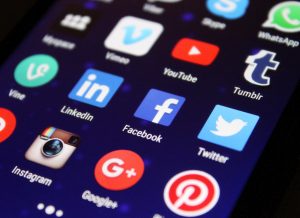
Social Media Applications

Social media is no longer just a way to chat with your friends – it’s an opportunity to improve your business. Social media is a powerful digital marketing tactic; posting consistent, relevant content will help build a loyal following. Consumers have daily conversations about your industry. The best way for your company to remain at the center of the conversation is to become a part of the conversation. Social media is a forum for conversations, reviews and trending information, and must be constantly monitored. It’s crucial to know that it’s not all about receiving likes. One person can handle social media marketing, but the best work is done when writers, photographers and graphic designers create content together. There’s a lot to understand about social media. Here’s some more information.

Content Marketing

Blog Writing

Businesses are continually finding ways to carve a place in the minds and hearts of consumers. The days of using a catchy jingle or a colorful print ad to capture customers are gone. In our digital age, one of the best ways to build trust among consumers is to offer something of value. Creating content (like blogs or video seminars) that solves a problem, entertains or educates consumers will help your business stand out. The content marketing process usually calls for a videographer/photographer, writer and graphic designer. Read on about our content marketing process.

Email Marketing

New Email Notification

While email may be one of the oldest forms of digital communication, it also is one of the highest converting mediums. An effective email marketing strategy can connect you to your audience; email marketing software helps you understand your audience’s response so that you can plan your next marketing move. It’s a good way to ensure that specific audience members are receiving important announcements and opportunities. Email marketing is not as simple as just hitting send, the writing, visuals and flow of information must be well-thought-out. More about email marketing can be found here.

Public Relations & Reputation Management

5- Star Review

Public relations focuses on storytelling, persuading and maintaining mutually beneficial relationships on clients’ behalf. The goal is to ensure that your business is being positively discussed by the public – both in person and online.  PR professionals work to repair the business’s reputation and mend the repercussions if a business has been negatively impacted. When a business takes a hit, it doesn’t take long before it’s being discussed on the internet, making crisis management a digital concept. PR professionals must repair the digital status by pushing down any negative articles or comments in search rankings. This also entails sending custom messages to all stakeholders. Writers, spokespeople and social media managers may make up a PR team. If you need help managing your reputation, here’s a more in-depth look at our process.

Although we’ve discussed each component of digital marketing as separate, it takes a team of digital communication professionals to work together for consistency and success. Our clients utilize our team of graphic designers, content strategists, videographers, PR professionals, website developers and SEO experts for every digital marketing project. The best digital marketing is done as a team with a goal, tone, strategy and audience in mind.

Do you have a clearer understanding of digital marketing services? If not, give us a call to learn more about how we can help advance your business: (813) 908-6862.

You Might Also Like:

Phoebe

A recent graduate from the University of Tampa, Phoebe brings an understanding of journalism, PR, advertising & branding to the Absolute team. Her extensive customer service and cross-cultural communication experiences give her insights into various perspectives.

More Posts

Building A Website for Your Business: Frequently Asked Questions

Sharing is caring!

Building a website for your business, but finding yourself stuck? It’s no simple task. In a world full of websites, (over 1.8 billion), creating a unique and usable website with relevant content can be daunting to even the most tech-savvy. When generating or re-doing a website, there are a variety of elements to consider ranging from user experience to information hierarchy. If this sounds like a bunch of gibberish, you’re not alone.

How many websites do you visit daily? I can’t keep track on two hands. Nielsen reports that American adults spend over 11 hours a day interacting with media, and a quarter of U.S. adults report being online constantly, but we seldom give thought to the logistics behind the screen. How do websites actually work? When it comes to generating a website for your business, do you know the necessary steps to take? Can you tell an effective site from an ineffective one? Our team has 20+ years of experience designing websites, and we’re here to explain what it takes to build an effective website for your business. We’ll also provide you with examples, so you can see the difference between effective and ineffective web pages for yourself.

1. How are websites created?

From a technical point of view, websites consist of software code (HTML, CSS, JavaScript) that is rendered by web browsers. Although a website can be written entirely in HTML, most websites today are created using a server-side language such as PHP or a Content Management System (CMS) such as WordPress or Drupal. Some simple websites are created using drag and drop tools such as Wix. However, to create more complex websites, you’ll need a skilled, professional website developer.

As for the actual process of creating websites, this can differ based on who is building the website, their experiences and preferences, the size and complexity of the website, and your budget. Most website development processes can be distilled into three phases: design, development, and deployment.

2. How long does it take to create a website?

This is a pretty common question. Most clients want to know how long the project will take before the project begins. The challenge is that developers often have little information about the project before they are asked this question. Some developers will provide a SWAG (Scientific Wild Ass Guess). This isn’t entirely worthless, because the developer is likely an expert and is basing the estimate on their past experience. However, we do not recommend relying on SWAGs and suggest asking for a second estimate after the design process has been completed.

3. What type of content does my website need?

As every organization is different, so too is every website. Your website content depends on your business and your target audience, however, there are a few pages that every website needs such as a home/landing page, an about page, a contact page, and a product/service page.

Besides the type of pages on your website you need, it is important to have clear calls to action throughout your website. Understanding why a visitor has come to a particular page should help you decide on what kind of calls to action will be most successful.

These are just some basic content considerations.  There are hundreds of potential content features to be utilized, from blogs to event calendars, to photo galleries. The more information you give about your business and services, the better. However, the material must be appropriate for your audience and organized deliberately to ensure understanding and accessibility.

4. Why does a website’s structure matter?

Designing a user-friendly website structure is perhaps the most important part of website development. This will positively or negatively affect the overall user experience. Internet surfers typically seek a specific answer or product and may get frustrated if they can’t find what they’re looking for quickly. In fact, users will leave your web page within 10 seconds, unless you clearly communicate your value proposition. This is why it is imperative to optimize the user’s experience by making the content or action they are seeking clear and easy to find. A good user experience means that the customer will stay on your site, and possibly return in the future.

5. What is responsive website design?

Responsive website design changes website appearance based on the device being used to view it. According to Statista, more than 50% of all global web traffic comes from cell phones. Since cell phones are sized differently than desktops and tablets, websites must accommodate varying screen dimensions. Responsive website design does this by shuffling elements around. If done incorrectly, this could negatively affect the user experience from one device to the next. Your site must be programmed to respond to each device so that the user experience stays consistent and straightforward across all mediums.

6. How will my website stand out?

Your site will stand out if it’s easy-to-use, eye-catching, and true to your brand. Forbes recommends to “avoid the natural inclination to make your website about you.” Instead, make it about the consumer/client. Knowing your target audience and how to appeal to them is key in designing a stand-out site. What are your visitors looking for, how can you help them, and what type of content do they enjoy most? Provide users with exactly what they want, and surprise them with material that they don’t even know they want.

7. Should my website be updated?

Technology advances rapidly, so staying aware of the newest updates and trends is necessary to keep your website relevant. Changes in industry and consumer behavior also come into play. By analyzing user patterns and data, it becomes apparent when changes should be made. Our agency re-evaluates & tweaks clients’ sites on a regular basis. We also recommend major updates/site makeovers every two or three years at least.

8. How can I tell if my website is effective?

Regular website maintenance is essential. Developers and marketers must work together to consistently evaluate visitors’ interaction with the site. Are users following through with the call to action? This is known as conversion optimization, and it is the primary way to tell if your website is efficient. For the best outcome, work with a full-service digital marketing agency, so you can discuss goals and implement marketing strategies from the start. This way, the website developer will work directly with the marketers who define objectives and tactics for the site.
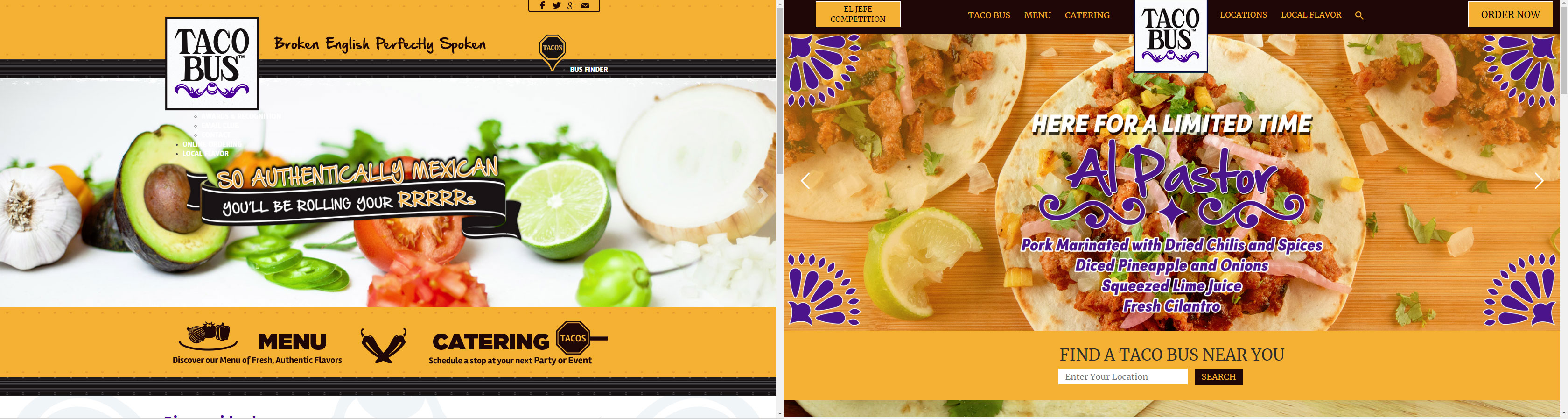
Your website is a vital communication tool that must convey your brand’s message effectively. If built, monitored, and maintained well, potential consumers will be more likely to engage with your brand. Check out these examples of website makeovers to see what Absolute can do for you.

A before and after image of Anthony & Partners’ website A before and after image of Taco Bus’ website

You Might Also Like:

Phoebe

A recent graduate from the University of Tampa, Phoebe brings an understanding of journalism, PR, advertising & branding to the Absolute team. Her extensive customer service and cross-cultural communication experiences give her insights into various perspectives.

More Posts

Building a new website, or redoing yours? Here’s the web design industry jargon you should know

benefits_of_building_with_PHPIf you’re considering updating your company’s website or starting a new one from scratch, you’ll likely want to be in on the conversations with your web development team as your site, and online identity takes shape. Unfortunately, developers aren’t always the easiest people to communicate with as they tend to casually throw out development lingo they might expect everyone to know. Here’s Absolute’s quick and easy cheat sheet for understanding basic web development vocabulary.

FTP

FTP stands for File Transfer Protocol, and in computing terms, its name signifies the standard for transferring files between a client and a server over the Internet. If you’re building a website, it’s fundamental tool, because it serves as access to a directory or a sub-directory of all your files. Let’s say you’re going to use WordPress as your CMS (explained in a minute) and develop a website over a web server; then you will likely use FTP to move your files over. FTP is one of the OG’s of the web development world and has been around since 1971.

CMS

CMS stands for Content Management system, and it is a computer application that supports creation and editing of digital content, typically, a website. Many have touted it as the most powerful web development tool since the invention of PHP (which we feature in another blog by one of our stellar senior developers!). CMS’s use a database to create, edit, and house HTML content in a way that can be managed by a user or group of users.

Content Management Systems are simple and easy to use, but when choosing one, always make sure that it will support the features and functionalities you need for your website. Some of the more popular CMS’ include WordPress (our pick), Joomla, and Drupal, but there are dozens of others. When selecting a CMS, consult not only with an IT professional, but a creative agency that also is versed and understands best practices for that particular CMS.

HTTP vs HTTPS:

HTTP stands for Hypertext Transfer Protocol, and it is a protocol that is used to transfer information between a web browser, and a website you are using. If the website were to be intercepted, the person making the interception would be able to see the information you’re viewing on a website and sending on a website.

A site that has HTTPS is further secured by a Secure Sockets Layer (SSL) certificate.

SSL

SSL stands for Secure Sockets Layer and is a separate security protocol that can be added to your website to increase security. It’s recommended to purchase these security certificates if your website requests sensitive information such as credit card information, or locations.

SMTP

Simple Mail Transfer Protocol is an Internet standard for e-mail transmission. Dating back to 1982, it is a function that opens communication between two mail servers.

CSS

CSS stands for Cascading Style Sheets, which is a coding language that gives developers the ability to customize the appearance of web pages. Modifying CSS files can allow you to edit fonts, web page layout, colors, and more.

HTML

Hypertext Markup Language, aka HTML, is a coding language that describes the structure of a web page and can give web developers the ability to publish documents with headings, tables, lists, photos, hyperlink content, and multimedia content such as videos and clip clips. It can also be used to design forms that perform specific functions, such as make reservations, order, and purchase products online.

SSH

SSH stands for Secure Shell and is a protocol that provides a secure channel on an unsecured network. Its most popularly known application is for remote logins to computer systems or applications by users. The encryption that is used by SSH is intended to provide confidentiality of your data over an unsecured network like the Internet.

CDN

CDN stands for Content Delivery Network and is a system that stores a cached version of its content in multiple locations, to minimize the distance between you and your content. Why would this be beneficial? Because it increases the speed of the delivery of your content. Today, more than 50% of traffic is being served by CDNs, because every second matters when you are trying to convert a customer on your website.

Hosting

A web hosting service provider is a company or business that provides the technology for a website or webpage to be viewed on the Internet. It does this by storing your website’s information on a special computer called a server. On some occasions, if a site isn’t available or accessible online, it requires contacting the web hosting company to see if something is malfunctioning on the server.

If you have a partner that performs website maintenance services for your business (wink wink), they can handle these types of situations that could easily cost your business if undetected and untreated.

Domain Registrar

According to Wikipedia, a domain name registrar is “an organization or commercial entity that manages the reservation of internet domain names. A domain name registrar must be accredited by a generic top-level domain (gTLD) registry and/or a country code top-level domain (ccTLD) registry.”

There are many domain name registrars to choose from. Some of the more popular ones you may have heard are GoDaddy, Network Solutions, and Name.com.

Building a new website is an exciting time for your business. If you don’t understand all the language your developer uses, don’t be afraid to ask what those terms mean. Do you have any other web development jargon that we haven’t covered here? Contact us to learn more!

You Might Also Like:

Miné Salkin

Miné Salkin is a multimedia producer with a specialty in marketing, tech writing and digital storytelling.

More Posts